This page contains affiliate links. If you purchase through them we may earn a small commission at no extra cost to you. Learn more
Best Solar Panel Installers in the UK (2026)

The installer you choose matters more than the panels. A good installer means a watertight roof, an optimised system, valid MCS certification for SEG payments, and someone to call if something goes wrong. A poor one means leaks, underperformance, and a warranty you cannot enforce.
This guide covers every major solar installer operating in the UK as of April 2026 — what they offer, where they operate, and what to watch for. No installer has paid to be listed here. This is not a ranking.
Quick comparison — national installers
All prices are approximate starting points for a 4 kWp system including installation, VAT at 0%, scaffolding, and MCS certification. Your actual quote will vary based on roof type, location, panel brand, and battery inclusion. Prices sourced from installer websites and customer-reported quotes — always obtain your own quotes.
National installers — what each offers
Octopus Energy Solar
Coverage: England and Wales Parent company: Octopus Energy Group MCS certified: Yes
Octopus Energy Solar is the installation arm of the Octopus Energy Group. The main draw is integration with Octopus's electricity tariffs — if you are on or considering Octopus Go, Intelligent Octopus Go, or Octopus Flux, having your solar system installed by Octopus can simplify the setup of tariff-aware battery charging. This does not mean other installers cannot set up Octopus tariff integration — they can — but Octopus handles it as part of its own onboarding.
What to watch for: Compare Octopus's quote against independent installers on a cost-per-watt basis. Being on an Octopus tariff does not require using Octopus as your installer.
British Gas Solar
Coverage: UK-wide Parent company: Centrica MCS certified: Yes
British Gas Solar has the widest geographic coverage of any energy company installer, operating across England, Scotland, and Wales. It often bundles solar with existing British Gas products — boiler servicing contracts, HomeCare packages, or smart home products. If you are already a British Gas customer, the convenience of a single provider may appeal, but always compare the total installed cost against standalone quotes.
What to watch for: British Gas historically charges a premium relative to independent installers. Ensure the quote is competitive on cost per watt before the convenience factor is considered.
EDF Solar
Coverage: England Parent company: EDF Energy MCS certified: Yes
EDF Solar offers both outright purchase and lease arrangements. The lease option means EDF retains ownership of the panels on your roof — you pay a monthly fee and benefit from the generated electricity. This can reduce upfront cost to zero, but it introduces complications if you sell the property, as the lease transfers to the buyer or must be settled.
What to watch for: If considering a lease, read the full contract terms carefully. Leased panels are not yours, which can complicate property sales and may affect mortgage applications. For most homeowners, outright purchase offers better long-term value.
Solar Lease Agreements
A solar lease means the panels on your roof belong to someone else. You benefit from reduced electricity bills, but the lease creates an ongoing financial commitment and a charge on your property. Conveyancers report that leased solar panels are one of the most common causes of delay in property transactions. If you are likely to move within 10 years, consider carefully.
EON Next Solar
Coverage: England Parent company: EON Group MCS certified: Yes
EON Next Solar integrates with EON Next energy tariffs, including EON Next Drive for EV owners. The installation service is relatively new compared to Octopus and British Gas, having expanded significantly through 2025. As with other energy company solar arms, the key question is whether the price is competitive against independent installers doing the same work with the same or better equipment.
What to watch for: Check which panel and inverter brands EON specifies in the quote. Some energy company installers use own-brand or budget components to keep headline prices low.
Sunsave
Coverage: England, Wales MCS certified: Yes
Sunsave uses an online-first model — you input your property details, receive an initial quote through their platform, and then a surveyor visits for a physical assessment. Sunsave has positioned itself on competitive pricing and a modern app-based experience for system design and monitoring. It also offers Sunsave Plus, a subscription model where you pay monthly rather than upfront.
What to watch for: Sunsave is both an installer and a comparison site — it publishes content about solar that naturally highlights its own products. When reading Sunsave's guides, bear in mind that they are the vendor. Their pricing tends to be competitive, but verify the quote against independent quotes as you would with any other installer.
Project Solar
Coverage: England MCS certified: Yes (for installed systems)
Project Solar's distinguishing feature is its supply-only option — you can purchase panels, inverter, and mounting hardware from Project Solar and arrange your own MCS-certified electrician to install them. This can reduce costs significantly if you have access to a trusted electrician, but the MCS certification responsibility sits with whoever performs the installation, not the equipment supplier.
What to watch for: If using the supply-only route, you must ensure your electrician is MCS-certified for the installation to qualify for SEG payments and consumer protections. Project Solar also offers full supply-and-install — compare both routes.
Supply-Only Can Save 20-30%
If you have access to a competent, MCS-certified electrician, the supply-only route through Project Solar or similar suppliers can reduce total system cost by 20–30% compared to a full install quote. The trade-off is that you manage the project yourself — scaffolding, scheduling, and quality assurance become your responsibility.
Spirit Energy
Coverage: England, Wales MCS certified: Yes
Spirit Energy is a traditional solar installer offering solar-only and solar-plus-battery packages. It is well-established in the residential market and operates as a more conventional installer compared to the energy company arms. Request a full itemised quote and compare component brands against other quotes.
Green Building Renewables
Coverage: England (multiple regional branches) MCS certified: Yes
Green Building Renewables operates through regional branches, which can be an advantage for aftercare — you are more likely to have a local office to contact if an issue arises after installation. The company covers both domestic and commercial installations. Its multi-branch structure means service quality may vary by location — check local reviews for your specific branch.
Blue Ape Renewables
Coverage: England and Wales MCS certified: Yes (also NAPIT and RECC registered)
Blue Ape Renewables installs solar PV, battery storage, air-source heat pumps, EV charging and solar carports. Up to 25-year product warranties plus workmanship cover. NAPIT covers electrical compliance and RECC adds consumer-code protection on top of MCS certification. Established 2021.

Blue Ape Renewables
MCS-certified installerMCS-certified UK installer covering solar PV, battery storage, air-source heat pumps, EV charging and solar carports. NAPIT and RECC registered with up to 25-year product warranties.
Get a Blue Ape quoteAffiliate link — we may earn a small commission at no extra cost to you
Regional and independent MCS-certified installers
National installers are not automatically better than regional ones. The UK has hundreds of smaller MCS-certified solar companies, and they account for a significant share of residential installations. Smaller firms often have:
- Lower overheads — no national marketing budget, no call centre, which can translate to lower prices
- Faster aftercare — a local installer with 50 customers in your town is likely to respond faster than a national company with 50,000
- Stronger local reputation — a regional installer depends on word-of-mouth referrals in a small area, which creates a strong incentive to do good work
Examples of well-established regional installers (not exhaustive, no endorsement implied):
To find MCS-certified installers in your area, use the official search at mcscertified.com/find-an-installer filtered to your postcode.
What every installer should provide
Before signing with anyone — national or local — confirm the following:
MCS certification
MCS certification is non-negotiable. Without it:
- You cannot register for Smart Export Guarantee (SEG) payments
- You lose access to government-linked grants
- You lose the consumer protections that come with MCS-certified work
Every MCS-certified company has a registration number searchable at mcscertified.com. If an installer cannot provide this number, or claims to use an "equivalent" scheme, walk away. There is no recognised equivalent for domestic solar in the UK.
Insurance-Backed Guarantee (IBG)
An IBG means that if the installer ceases trading during your warranty period, the remaining warranty transfers to the IBG insurer. Given that solar warranties run 5–10 years and companies can fail in that time, an IBG is essential protection. Ask which IBG provider they use and get the name in writing.
Physical site survey
Any installer quoting solely from Google Maps or satellite imagery is cutting corners. A proper site survey involves visiting your property to assess:
- Roof condition, pitch, and orientation
- Shading from trees, chimneys, and neighbouring buildings
- Consumer unit condition and available space
- Scaffolding access requirements
Quotes produced without a site survey are estimates, and the final price may shift significantly.
Itemised quote
Each quote should include:
- Panel brand, model, and wattage per panel
- Inverter brand, model, and type (string, hybrid, or microinverter)
- Mounting system and fixing type for your roof material
- Total system size in kWp
- Estimated annual generation in kWh (based on your location and roof)
- Scaffolding cost, stated separately
- DNO notification (G98 or G99) — confirm the installer handles this
- MCS certificate — confirm this is issued on completion
- Workmanship warranty length and IBG provider name
For a full line-by-line breakdown of what each part of a solar quote means, see the guide to reading a solar quote.
Red flags — walk away from these
Pressure to sign on the day. "This price expires tonight" and "we only have two slots left" are sales tactics. Reputable installers give you time to compare.
No physical site survey. A price given without visiting your property is not a reliable quote.
Full payment upfront. A 10–25% deposit is standard. Demanding full payment before work begins is a serious red flag.
No MCS certification. If an installer cannot produce a current MCS number, they cannot provide a valid MCS certificate — which means no SEG, reduced protection, and questions about competence.
Unusually low price without explanation. A quote far below market rate may indicate cheaper panels, an unqualified subcontractor, or corners being cut on electrical work.
VAT at 20%. Residential solar installations have been zero-rated for VAT since April 2022. A quote including 20% VAT on a home installation is either wrong or dishonest.
For more on spotting bad installers, see the full guide to solar scams and rogue installers.
How to compare quotes
The most useful metric for comparing quotes of different system sizes is cost per watt (£/W):
Total installed price / system size in watts = cost per watt
A 4 kWp system at £8,000 = £2.00/W A 4.5 kWp system at £8,500 = £1.89/W — better value despite the higher total
As of April 2026, typical installed costs for residential solar in the UK:
These ranges include panels, inverter, mounting, scaffolding, electrical work, DNO notification, and MCS certification. Battery storage is additional — typically £3,000–6,500 depending on capacity.
For full cost breakdowns by system size and region, see solar panel costs in the UK.
Verifying an installer — checklist
Use these resources before accepting any quote:
Check How They Handle Bad Reviews
Look at how the installer responds to negative reviews. A company that acknowledges mistakes and explains how they resolved them is more trustworthy than one with only five-star ratings or no responses at all.
Further reading
- How to choose a solar installer — detailed red flags and green flags checklist
- How to read a solar quote — line-by-line quote breakdown
- Solar panel costs in the UK — full pricing data by system size and region
- What happens if your installer goes bust — IBG claims and finding a new installer
- Solar scams and rogue installers — how to spot and report fraud
- Find solar panels by location — city and region guides with local installer context
Share this article
Order your Energy Performance Certificate online — see how solar improves your home's energy rating. Required before selling or renting. All assessors are fully accredited.
Affiliate link — we may earn a small commission at no extra cost to you
Stay informed
Get free solar updates direct to your inbox
Related reading
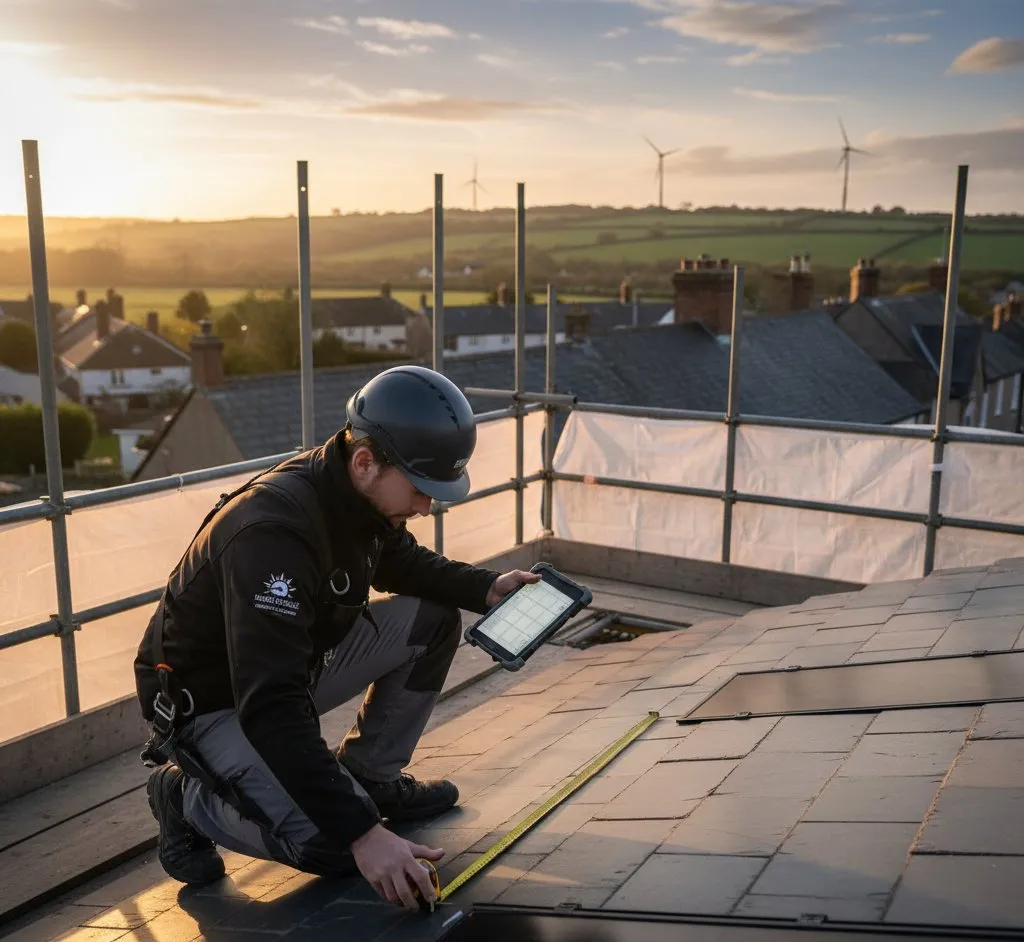
How to Read a Solar Panel Quote: A Line-by-Line Guide
What every line on a solar installer's quote means, what should be included, what's missing, and the red flags that suggest you should get another quote.
How to Choose a Solar Installer: Red Flags and Green Flags
How to choose a reliable solar panel installer in the UK. What to look for, what to avoid, essential questions to ask, and how to compare quotes properly.


Switch to Octopus Energy
Get 50 credit when you switch. We get 50 too — win-win.

Prefer 100% renewable, community-owned?
Your Co-op Energy runs on 100% renewable electricity — profits reinvested in community energy projects.
What does this mean for YOUR home?
Design your perfect solar setup in under 3 minutes. Free, no sign-up required.
Build Your Solar System