This page contains affiliate links. If you purchase through them we may earn a small commission at no extra cost to you. Learn more
Solar Panels vs Heat Pump: Which Should You Get First?
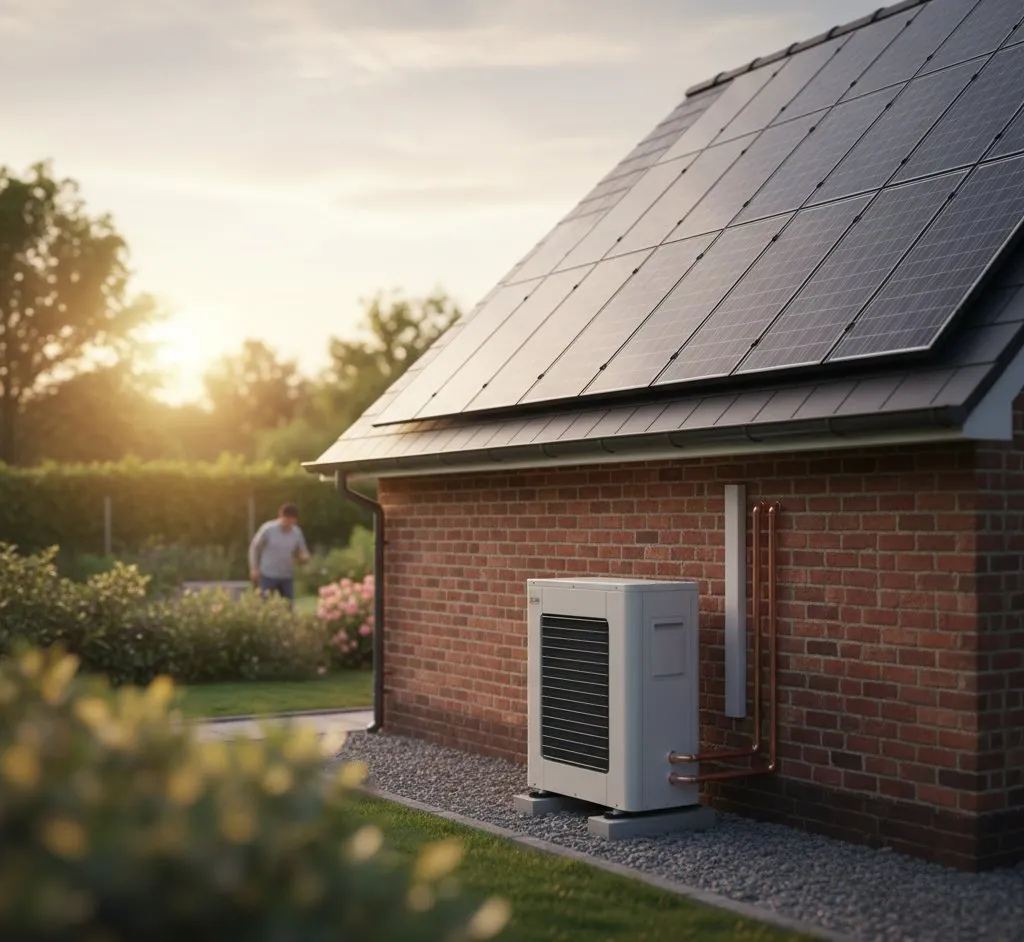
Both solar panels and heat pumps are key technologies for decarbonising UK homes. If you can only afford one right now, which should you install first? The answer depends on your current heating system, insulation, and electricity usage.
The Cost Comparison
*Heat pump savings compared to gas; can be negative if replacing a modern efficient gas boiler at current gas prices.
The Boiler Upgrade Scheme (BUS) grant of £7,500 dramatically improves heat pump economics, reducing the effective cost to £3,000–£8,000. This changes the calculation significantly.
When to Choose Solar First
Your Gas Boiler Is Still Working
If your boiler is under 10 years old and functioning well, there's no urgency to replace it. Solar panels start saving money from day one with no disruption to your heating.
You Want the Simplest Installation
Solar installation takes 1–2 days with minimal disruption. A heat pump installation can take 3–5 days and may require new radiators, pipework changes, and a hot water cylinder.
Your Electricity Usage Is High
If you already use significant electricity (working from home, EV charging, electric cooking), solar panels offset expensive grid electricity at around 24.67p/kWh (Q2 2026 price cap). The savings are immediate and predictable.
Your Home Isn't Well Insulated
Heat pumps work best in well-insulated homes with large radiators or underfloor heating. If your home has poor insulation, the heat pump will struggle and run inefficiently. Solar works regardless of insulation level.
When to Choose a Heat Pump First
Your Boiler Needs Replacing
If your gas boiler is failing or due for replacement, a heat pump replaces it entirely. You'd be spending money on a new heating system anyway — the incremental cost of a heat pump (after the BUS grant) over a new gas boiler can be as little as £1,000–£3,000.
You're Off the Gas Grid
Homes using oil, LPG, or electric heating have much higher heating costs. A heat pump offers dramatic savings compared to these fuels — often £800–£1,500/year. The payback is much faster than for homes switching from mains gas.
Your Home Is Already Well-Insulated
A modern, well-insulated home with decent-sized radiators or underfloor heating is ideal for a heat pump. The efficiency (COP of 3–4) means you get 3–4 kWh of heat for every 1 kWh of electricity.
You Can Get the BUS Grant
The £7,500 BUS grant makes heat pumps far more affordable. If you're eligible and your home is suitable, the grant-subsidised heat pump may offer better value than unsubsidised solar.
The Ideal Order of Investment
For most UK homes, the optimal sequence is:
- Insulation first — loft, cavity walls, draught-proofing (£500–£3,000)
- Solar panels second — start generating savings immediately (£6,000–£8,000)
- Heat pump third — when your boiler needs replacing (£3,000–£8,000 after BUS grant)
- Battery storage fourth — to optimise the solar + heat pump combination
This sequence works because each step improves the economics of the next. Insulation reduces the heat pump's workload. Solar reduces the electricity cost of running the heat pump. A battery lets you run the heat pump on stored solar electricity.
Solar Makes Heat Pumps Cheaper to Run
A heat pump running on grid electricity costs roughly 7–8p per kWh of heat (at ~24p electricity and COP of 3.5). Running on solar electricity, the cost drops to effectively zero. If you install solar first, the heat pump becomes more affordable to run when you add it later. This is why solar-first is usually the right order.
The Combined Case

When you have both solar and a heat pump, the synergy is powerful:
- Summer: Solar generates surplus electricity. The heat pump uses a fraction of this for hot water. Export the rest.
- Winter: Solar generation is lower but the heat pump's electricity demand is highest. Solar offsets some of this demand, reducing bills.
- With a battery: Store daytime solar, run the heat pump in the evening on stored electricity instead of expensive grid power.
A 4kW solar system + 8kW heat pump + 5kWh battery in a well-insulated 3-bed semi could achieve annual energy costs of just £300–£600 — compared to £1,500–£2,000 for gas heating + grid electricity alone.
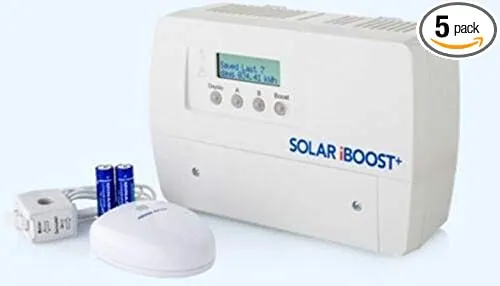
Solar iBoost+ Immersion Heater Controller
£1503000
auto_divert,manual_boost
1
true
Affiliate link — we may earn a small commission at no extra cost to you
EPC Impact Comparison
Both technologies significantly improve your EPC:
A heat pump typically has a bigger EPC impact than solar because heating is a larger component of the SAP calculation. But solar's improvement is still substantial, especially when combined.
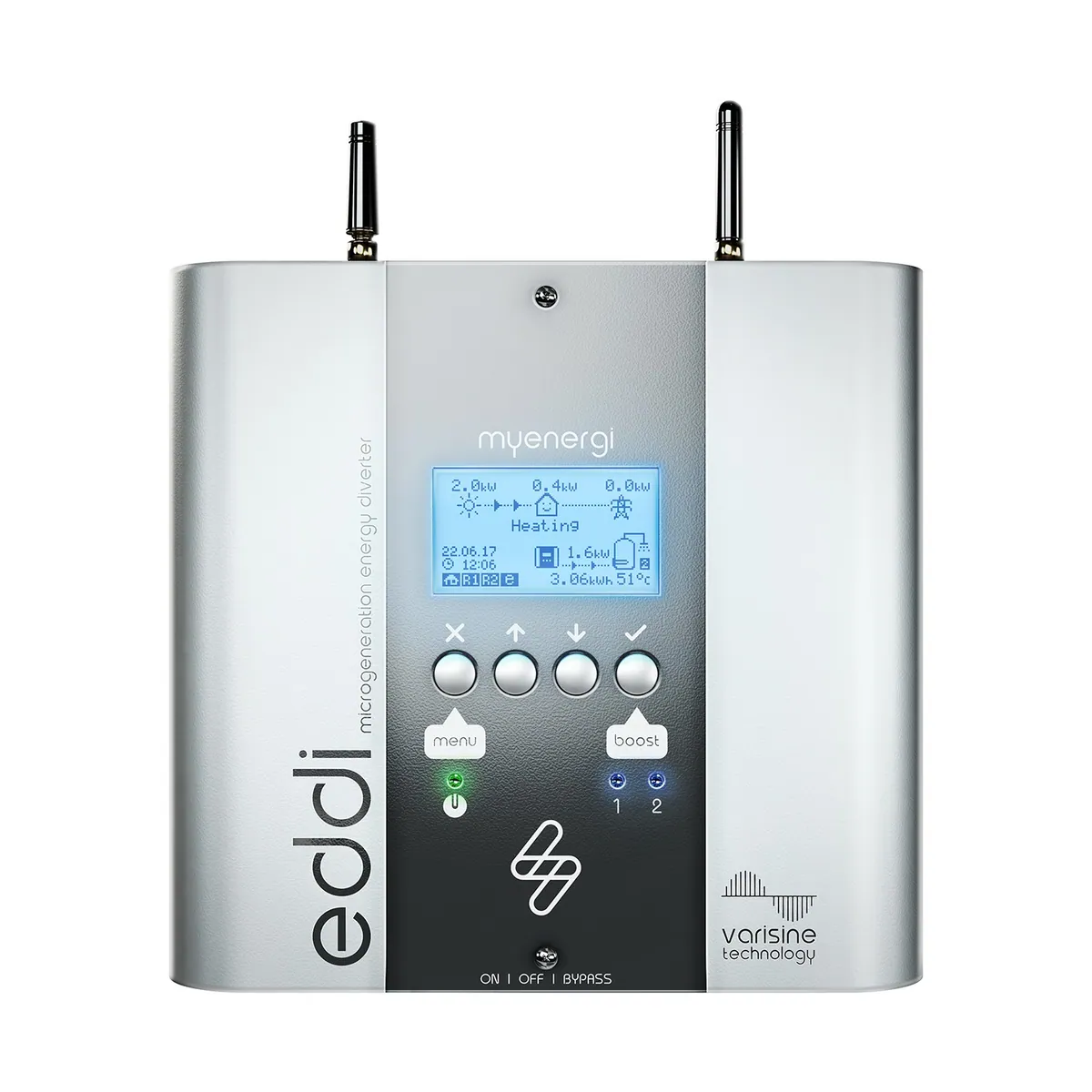
myenergi Eddi Solar Diverter
£4903000
power_divert,timed_boost
2
configurable
Affiliate link — we may earn a small commission at no extra cost to you
What the Installers Won't Tell You
Heat Pump Disruption Is Real
A heat pump installation often requires new pipework, a hot water cylinder (if you don't have one), potentially larger radiators, and external space for the outdoor unit. This can be disruptive and expensive beyond the unit itself. Solar installation is comparatively simple.
Heat Pump Running Costs Can Be Higher Than Gas
At current UK energy prices (gas ~6p/kWh, electricity ~24.67p/kWh per the Q2 2026 price cap), a heat pump with a COP of 3 produces heat at ~8p/kWh — slightly more than gas. The heat pump saves money overall because it's more efficient, but the margin is thinner than marketing materials suggest when compared to a modern condensing gas boiler.
Solar Savings Are More Predictable
Solar generation varies by weather but is reasonably predictable year to year. Heat pump performance depends on how well the system was designed, installed, and set up — there's more variability in outcomes.
Beware the Heat Pump on a Poorly Insulated Home
If your home has solid walls, single glazing, or significant draughts, a heat pump will run at low efficiency and high cost. In poorly insulated homes, invest in insulation and solar first. Only add a heat pump once the fabric of the building is efficient enough to support one.
The Decision Framework
For details on running solar and a heat pump together, see our solar + heat pump combination guide.
What About Ground Source Heat Pumps?
Air source heat pumps (ASHPs) — the units mounted on an outside wall or in the garden — get most of the attention, but ground source heat pumps (GSHPs) are also eligible for the BUS grant and worth understanding.
How Ground Source Differs
A ground source heat pump extracts heat from the ground rather than the air. It does this via either:
- Horizontal ground loops — pipes buried in trenches across your garden, typically 1–1.5m deep. You need a reasonably large garden (usually 200m² or more of undisturbed ground).
- Vertical boreholes — pipes drilled 50–150m straight down. Used where garden space is limited, but requires specialist drilling equipment and significantly higher installation costs.
Because ground temperatures remain relatively stable at around 8–12°C year-round (compared to air which can drop to -10°C in winter), GSHPs typically achieve higher efficiencies than ASHPs in the coldest months.
Cost Comparison
The £7,500 BUS grant applies equally to both types — but it goes much further against an ASHP cost than a GSHP one. Ground source systems are more expensive partly because of the groundwork: digging trenches or drilling boreholes is a significant undertaking.
The Garden Disruption Factor
Installing a GSHP with horizontal loops means your garden will be dug up — substantially so. Lawns, flowerbeds, and any established planting in the affected area will be removed and replaced. It takes one to two growing seasons for the garden to fully recover. With vertical boreholes, surface disruption is less severe but the drilling rig access requires space and leaves some mess.
For most UK homeowners with modest gardens, the disruption alone is a significant deterrent. For those with larger plots in rural areas, it's more workable.
Efficiency and Output
A well-sized GSHP in a well-insulated home can achieve a Coefficient of Performance (COP) — the ratio of heat output to electricity input — of 3.5–4.5, compared to 2.5–3.5 for a typical ASHP in mid-winter. Over a full year, the difference in running costs is real but modest for most UK homes.
When a GSHP Makes Sense
Ground source heat pumps are worth exploring if you:
- Have a large rural property with extensive garden space
- Are replacing an existing GSHP system
- Need heating at scale (larger home, outbuildings, underfloor throughout)
- Are building new and can install loops before landscaping
For the majority of UK semi-detached and terraced homes, an ASHP combined with solar panels offers better value than a GSHP. The higher upfront cost of ground source, combined with garden disruption and the same BUS grant, means the economics rarely favour it as a first choice.
Solar + ASHP Is Usually the Better Combination
For most UK homes, solar panels paired with an air source heat pump delivers the best balance of cost, disruption, and long-term running savings. The ASHP's higher winter electricity demand is offset by solar generation in spring, summer, and autumn — and the combined payback is more predictable than a ground source system.
Share this article
Stay informed
Get free solar updates direct to your inbox
Related reading

How Much Do Solar Panels Cost in the UK in 2026?
UK solar panel costs 2026: realistic prices by system size, what is included, and what to push back on in your quote.

Solar Panels + Heat Pump: The Ultimate Combo?
Solar panels and heat pumps together: how the combination works, what it costs, real savings, and how to size the system for a UK home.


Switch to Octopus Energy
Get 50 credit when you switch. We get 50 too — win-win.

Prefer 100% renewable, community-owned?
Your Co-op Energy runs on 100% renewable electricity — profits reinvested in community energy projects.
What does this mean for YOUR home?
Design your perfect solar setup in under 3 minutes. Free, no sign-up required.
Build Your Solar System