This page contains affiliate links. If you purchase through them we may earn a small commission at no extra cost to you. Learn more
Solar Panels in Lancashire: Costs, Output, and County Guide
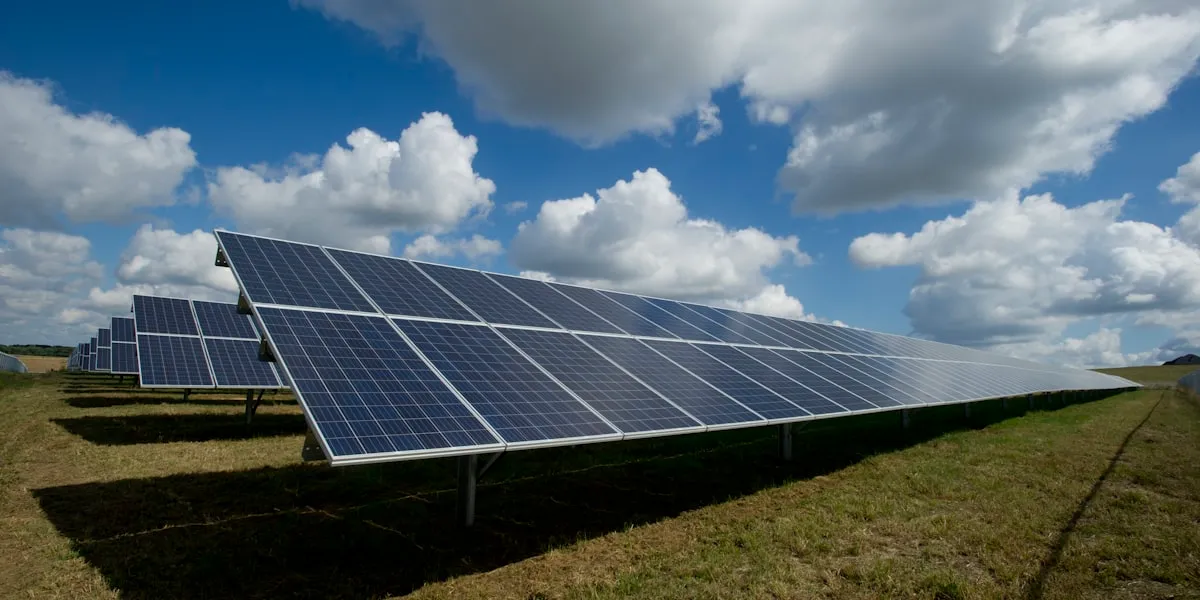
Does solar work in Lancashire?
Lancashire is a viable solar county, despite the perception that northern England does not get enough sun. Annual yields typically run around 840–880 kWh per kWp — broadly at the UK average of 850–900 kWh/kWp.
A 4kWp system in Lancashire generates approximately 3,360–3,520 kWh per year, covering a meaningful portion of a typical household's electricity needs.
840–880
kWh/kWp/year — A 4kWp Lancashire system generates around 3,360–3,520 kWh per year — at the UK average
Learn moreLancashire's yield reflects its position on the north-western edge of England — lower latitude than Scotland but affected by Atlantic weather systems and the Pennine uplands to the east. Preston, Blackburn, Burnley, and Lancaster see broadly similar yields; the Fylde coast around Blackpool performs slightly better due to its open western aspect.
How much does solar cost in Lancashire?
Lancashire is one of the more competitively priced regions for solar installation in England. Expect to pay roughly £1,400–£1,600 per kWp, making a 4kWp system around £5,600–£6,400 installed.
Lower installation costs help to offset the yield reduction compared with southern England. Payback periods in Lancashire typically run 10–13 years — longer than the south, but solar still makes financial sense over a 20–25 year panel lifespan.
Your electricity network: ENW (Electricity North West)
ENW — Electricity North West — manages the distribution network across Lancashire and the wider North West of England.
For solar installations in Lancashire:
- Systems up to 3.68kW (single-phase): G98 notification — your installer notifies ENW within 28 days of commissioning, no prior approval needed
- Systems above 3.68kW (single-phase): G99 pre-approval required before installation — allow 45–65 working days
- ENW has an online portal for network registration applications
Housing and system sizing
Lancashire's housing stock is heavily influenced by its industrial heritage. Preston, Blackburn, Burnley, Accrington, and Nelson have large areas of Victorian and Edwardian terraced housing — much of it with roof slopes running east to west. Lancaster, Clitheroe, and rural areas have a more varied stock including semis, detacheds, and farmhouses.
The Pennine edge — the eastern flank of the county around Burnley, Nelson, and Colne — is hillier and can experience more cloud and rainfall than the west of the county.
Sizing guidance:
- Victorian and Edwardian terraces: Many have north-south running terraces with east- or west-facing roofs. An east-west split array is often the best approach for these properties
- Semis and detacheds in Preston, Lancaster, and suburban Lancashire: 3–4kWp for standard three-bedroom homes
- Rural detached and farmhouses in the Ribble Valley: 4–6kWp depending on roof area and orientation
Local grants and planning
Forest of Bowland AONB: The Forest of Bowland is a large, sparsely populated AONB covering a significant area of inland Lancashire. Properties within the AONB may face stricter planning controls for solar. Contact Lancashire County Council or the relevant district before proceeding if you are in the Bowland area.
Conservation areas: Lancaster, Clitheroe, and various Lancashire market towns have conservation areas that restrict solar on principal elevations.
Available grant schemes:
- ECO4: For households on qualifying benefits or with a low EPC rating — active until December 2026
- Warm Homes Local Grant: Delivered through Lancashire County Council and district authorities — check current availability
- Warm Homes Plan: Government successor to ECO4 (published 21 January 2026); rollout ongoing — eligibility criteria still being finalised
- Smart Export Guarantee (SEG): Lancashire's yields make SEG export income modest but still worth accessing — compare rates across licensed suppliers
Don't let the north-west reputation put you off
Lancashire's solar yields are lower than Cornwall's — but so are your installation costs. Over a 25-year panel lifespan, a well-sited Lancashire system still generates tens of thousands of kilowatt-hours and saves a significant sum on electricity bills. The financial case is sound, even if the payback period is longer than the south.
Solar installers in Lancashire
MCS-certified installers covering Lancashire and the North West include Egg Solar, which has a regional presence across the county. National companies including Sunsave and British Gas Solar also cover Lancashire postcodes.
Before committing, confirm your installer's current MCS certification, ensure a site survey takes place before a specification is agreed, and gather at least three written quotes for comparison.
Our installer directory covers both national and regional installers in more detail. The MCS installer finder lets you search for certified companies near you.
Share this article
Order your Energy Performance Certificate online — see how solar improves your home's energy rating. Required before selling or renting. All assessors are fully accredited.
Affiliate link — we may earn a small commission at no extra cost to you
Stay informed
Get free solar updates direct to your inbox
Related reading
Solar Panels in Blackpool: Costs, Yields and Lancashire Coast Solar
Solar panels in Blackpool: ENW grid, Lancashire coast yields, ECO4 eligibility, and typical system sizes for Fylde Coast homes.
Solar Panels in Manchester: Costs, Output, and Local Advice
Solar panels in Manchester 2026. Expected output, costs, ENW connection, and grants for Greater Manchester homeowners.


Switch to Octopus Energy
Get 50 credit when you switch. We get 50 too — win-win.

Prefer 100% renewable, community-owned?
Your Co-op Energy runs on 100% renewable electricity — profits reinvested in community energy projects.
What does this mean for YOUR home?
Design your perfect solar setup in under 3 minutes. Free, no sign-up required.
Build Your Solar System