This page contains affiliate links. If you purchase through them we may earn a small commission at no extra cost to you. Learn more
Solar Panels for Holiday Lets: Tax, ROI, and What Changed
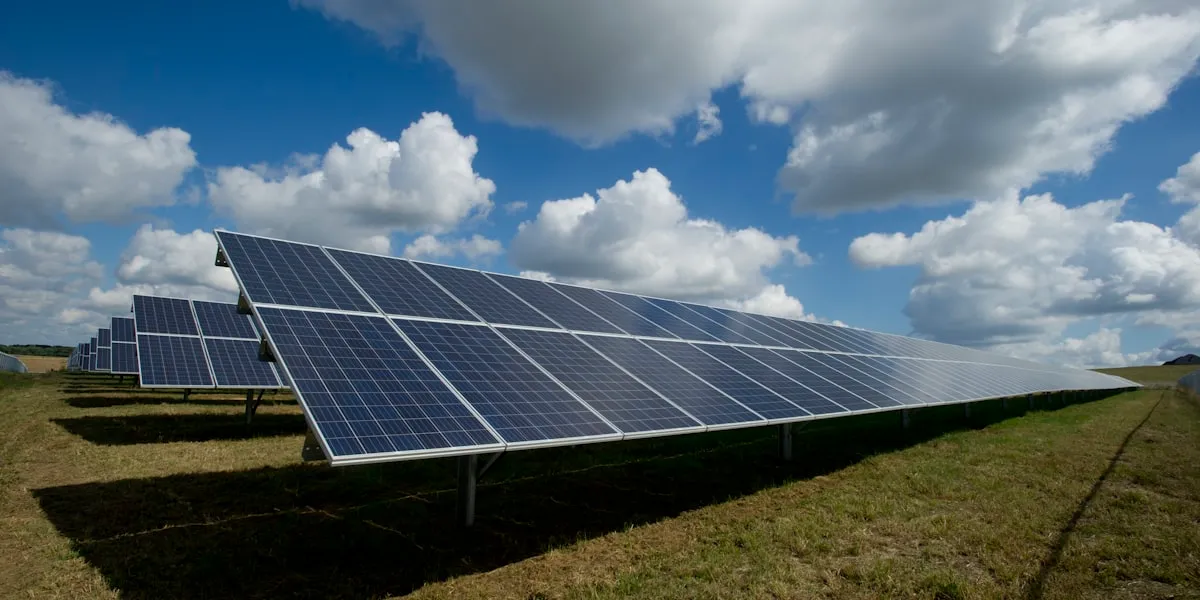
Holiday let solar has always had a different financial story from residential solar. Until recently, the tax treatment was unusually favourable. That changed in April 2025, and any content or analysis based on the old rules is now out of date.
This article covers what changed, what still works, and how to think about the ROI for a holiday let in 2026.
The critical tax change: FHL abolished April 2025
The Furnished Holiday Lettings (FHL) tax regime gave owners of qualifying holiday lets access to Annual Investment Allowance (AIA — up to £1 million). This meant the full cost of a solar installation could be written off against rental income in the year of installation. On a £10,000 system, that was a substantial immediate tax saving.
From 6 April 2025, this no longer applies.
The FHL regime was abolished entirely. Holiday lets are now treated as standard residential rental property for tax purposes. Under the old rules, a £7,000 solar system could generate £2,800 or more in immediate tax relief for a higher-rate taxpayer. That benefit is gone. Capital improvements — including solar panels — are not deductible as allowable expenses under standard rental rules. Only revenue expenses (repairs and maintenance) qualify. Additionally, business asset disposal relief (which gave a 10% CGT rate on eventual sale) has been removed — gains on holiday lets are now taxed at the standard residential CGT rate of 24%.
Old guides and calculators may be dangerously wrong
Many solar ROI calculators and holiday let guides written before April 2025 build significant FHL tax savings into their projections. These calculations are no longer valid. If you are working from a quote or ROI estimate that mentions capital allowances, AIA, or FHL tax treatment, it needs to be redone.
The tax case for holiday let solar has weakened materially. That does not make solar a bad investment for a holiday let — but it does mean the case now rests on operational savings rather than tax efficiency. Those savings are real.
Always speak to a qualified tax adviser about your specific position. This article provides general information only.
The operational case: still compelling
Even without favourable tax treatment, the economics of solar on a busy holiday let can be stronger than for a typical owner-occupied home. The reason is consumption pattern.
High daytime occupancy = high self-consumption
The typical commuter household self-consumes 25–35% of its solar generation — the rest is exported because nobody is home during the day. A holiday let flips this picture. Guests are present during the day: cooking, charging devices, running dishwashers, watching television, using electric showers. Occupancy during solar generation hours is high.
A self-consumption rate of 40–60% is realistic for a well-occupied holiday let — compared to 25–35% for a commuter home. More of what you generate, you use. Less is exported at the lower SEG rate.
Holiday let electricity consumption is higher than you think
A residential property uses 2,500–3,500 kWh per year on average. A busy 4–6 bedroom holiday let can easily use 8,000–15,000 kWh per year, because:
- Multiple guests using appliances simultaneously
- Hot tubs (2–4 kW continuously, running 24 hours)
- Electric underfloor heating or electric panel heaters
- Multiple televisions, games consoles, and device chargers
- More frequent dishwasher and washing machine cycles
The higher the running costs, the greater the absolute saving from solar.
Worked example
A 6 kWp system in a good UK location generates roughly 5,400 kWh per year. At 50% self-consumption — reasonable for a busy holiday let — that is 2,700 kWh saved at around 24.67p/kWh, equating to approximately £648 per year. Export of the remaining 2,700 kWh at around 5p/kWh (a typical basic SEG rate) adds another £135. Total annual benefit: approximately £783.
At a system cost of £7,000–£9,000 for a 6 kWp installation, that gives a payback period of roughly 9–12 years — longer than the pre-2025 FHL calculation, but well within the working life of a quality solar system (25+ years).
Occupancy patterns and void periods
Holiday lets have an unusual occupancy profile that shapes how you should think about system sizing and the seasons.
Peak season: High occupancy, high consumption, good solar alignment. Self-consumption is at its best during summer months when generation and guest usage peak together.
Low season and void weeks: The property may be empty for days or weeks. During these periods, solar output feeds entirely into export at SEG rates — typically 3.3–5.2p/kWh on a basic fixed tariff, or up to 15p/kWh on the best fixed-rate SEG deals. The economic case weakens during prolonged voids, so high seasonal occupancy is a meaningful factor in whether solar makes strong financial sense for a given property.
EPC improvement and guest appeal
Where a holiday let requires an Energy Performance Certificate — broadly any commercially let property in England and Wales — solar raises the EPC rating and SAP score. A 4–6 kWp system typically adds 8–15 SAP points, which can shift a property by one to two EPC bands. As Minimum Energy Efficiency Standard (MEES) thresholds tighten, a better EPC increasingly protects the property's lettability and may become a regulatory requirement.
Separately, eco-credentials are growing in significance on Airbnb, Sykes Cottages, and other platforms. Some hosts report measurably higher bookings or the ability to command a premium from environmentally conscious guests. This is hard to quantify but increasingly real.
Mention solar in your listing
Eco-credentials are increasingly searched for and filtered on Airbnb, Sykes, and holiday cottage booking platforms. A solar system — and especially a solar-plus-battery setup — is worth mentioning explicitly in your listing copy. "Powered by solar" and "battery backup" resonate with a growing segment of guests who factor sustainability into booking decisions.
Sizing for a holiday let: bigger than you think
The fundamental rule: size for peak occupancy, not average usage.
A standard domestic solar system is sized on the household's annual electricity consumption. For a holiday let, the peak load — when the property is fully occupied with guests — is what matters, because that is when electricity costs are highest and when solar can deliver the most savings.
Sizing rules of thumb:
- Start with a baseline of 4kWp for a 2-bedroom property
- Add 1–1.5 kWp per additional bedroom
- Add a further 1–2 kWp if there is a hot tub
- Ground-mounted systems can be worth considering for rural properties with space
Example: A 4-bedroom holiday cottage with a hot tub might need 6–8kWp to meaningfully offset running costs — double the 3–4kWp typical for a 4-bedroom family home.
6–8kWp
typical 4-bed with hot tub — vs 3–4kWp for an equivalent residential home — size for peak guest occupancy, not average household
Learn moreIf the property has electric underfloor heating throughout, a larger system and battery storage may make even stronger sense — particularly for shoulder-season lettings where some solar generation is available but electricity demand is still significant.
Practical management considerations
Holiday let solar introduces operational questions that do not arise in the same way for a primary residence.
Remote monitoring: If you manage the property remotely, you need a way to know if the system stops working. Most modern inverters include app-based monitoring that alerts you to faults or drops in output. Confirm this with your installer — remote monitoring is a practical necessity for unoccupied properties, not an optional extra.
Void periods: Systems continue generating when the property is empty. That electricity flows to export automatically. Ensure your SEG tariff is properly registered so you receive payment for it rather than exporting for free.
Maintenance costs: Solar requires minimal maintenance, but gutters near panels can cause shading and panels benefit from occasional cleaning — particularly in rural locations where bird activity is higher. Budget around £100–£200 per year for cleaning and periodic inspection. Check whether your property insurance covers solar equipment; specialist holiday let insurance policies vary significantly in how they treat solar.
Guest interaction: Guests do not need to manage anything. The system operates passively. If you have a battery, ensure any physical controls are locked or clearly labelled to avoid guests accidentally disabling the system.
Battery storage for holiday lets
A battery adds another layer of complexity. For holiday lets, the case for battery storage is weaker than for owner-occupied homes, because:
- Self-consumption is already high during the day — the battery's primary job (shifting daytime generation to evening) matters less
- The property may be vacant for weeks during low season — a battery sitting idle earns nothing
- Time-of-use tariff benefits depend on having consistent overnight demand to charge from cheap rates
Where battery storage makes sense for holiday lets:
- Evening occupancy is high and electricity demand is significant — guests cooking, watching films, using the hot tub after dark
- The property is in an area with regular low-season bookings — consistent year-round demand improves the battery ROI
- Off-grid resilience is a selling point — rural holiday lets increasingly market themselves on sustainability and resilience; a solar-plus-battery system can provide several hours of backup during a grid outage, which is a genuine differentiator for remote properties
- There is a hot tub — a battery can store solar generation during the day and use it to maintain the tub temperature overnight, reducing grid draw during peak evening hours
- Smart export / VPP income is being explored — compatible battery systems can earn grid services income regardless of occupancy
Battery costs: A 5 kWh battery adds roughly £3,000–£4,500 to the installation cost; a 10 kWh unit runs £4,500–£6,500. The payback is harder to calculate than for the panels alone, but for holiday lets with high evening consumption, a grid reliability concern, or strong sustainability marketing, the appeal is clear.
For most holiday let owners, getting the solar sizing right is the priority. Battery storage is a secondary decision.
VAT position
Holiday lets that qualify as "residential accommodation" can benefit from the 0% VAT rate on solar supply and installation, the same as owner-occupied homes. This rate applies until 31 March 2027, after which it reverts to 5%. On a £7,500 supply-and-fit quote, the current zero rate represents a saving of around £1,500 compared to the standard 20% VAT rate — a meaningful upfront benefit that remains in place for now.
If the property is used exclusively as a commercial enterprise (not as a home), a different VAT position may apply.
Get specialist VAT advice
The VAT treatment of holiday let solar depends on how the property is classified and how it is used. Do not assume 0% VAT applies automatically. A VAT specialist can confirm the position for your specific property before you commit to an installation.
SEG eligibility
Holiday let installations are eligible for the Smart Export Guarantee (SEG) if:
- The installation is MCS-certified
- A half-hourly export meter is in place
- The property has a qualifying electricity supplier
In practice, self-consumption is more valuable than SEG export for busy holiday lets — you avoid paying the full import rate rather than earning the lower export rate. SEG becomes more relevant during low-season periods when the property sits empty and surplus generation has nowhere to go.
Is it still worth it?
The decision is more marginal than it was before April 2025. Solar is likely to make sense for a holiday let where:
- The property has high seasonal occupancy (self-consumption rates are strong)
- Electricity running costs are significant — particularly if there is a hot tub or electric heating
- The property has a suitable roof or ground-mount area
- You plan to hold the property for 10 or more years (long enough for the payback to materialise)
- EPC improvement is needed or beneficial for regulatory or valuation reasons
Solar is less compelling where:
- Occupancy is low or very seasonal, meaning long void periods with export-only generation
- The property has a poor roof orientation or significant shading
- The ownership horizon is short (selling within 5–7 years)
- The upfront capital is needed elsewhere in the property
The bottom line for 2026
The FHL tax advantage is gone. The operational case — lower running costs, higher self-consumption, EPC improvement, guest appeal — remains solid for properties with substantial electricity consumption.
If your holiday let has a hot tub, electric heating, or high-occupancy periods, the solar economics are likely to work. Size the system for peak occupancy, get a proper quote from an MCS-certified installer, and take current tax advice before including any tax savings in your projections.
The old guides saying "solar pays off in 3–4 years thanks to AIA" are outdated. The new honest answer is: the payback is longer without the tax benefit, but the running cost savings are real, and for a high-consumption property they add up.
Share this article

Sell your property fast — solar panels can increase your home's value and make it more attractive to buyers
Affiliate link — we may earn a small commission at no extra cost to you
Stay informed
Get free solar updates direct to your inbox
Related reading

Solar Panels for Business: The UK Commercial Solar Guide
Commercial solar panels for UK businesses. ROI, tax benefits, capital allowances, and how business solar differs from domestic.
Are Solar Panels Worth It in the UK? The Honest Answer
Are solar panels worth it in the UK in 2026? Honest assessment of costs, savings, payback, and who benefits most.


Switch to Octopus Energy
Get 50 credit when you switch. We get 50 too — win-win.

Prefer 100% renewable, community-owned?
Your Co-op Energy runs on 100% renewable electricity — profits reinvested in community energy projects.
What does this mean for YOUR home?
Design your perfect solar setup in under 3 minutes. Free, no sign-up required.
Build Your Solar System