This page contains affiliate links. If you purchase through them we may earn a small commission at no extra cost to you. Learn more
Solar Diverters: Sending Surplus Power to Hot Water
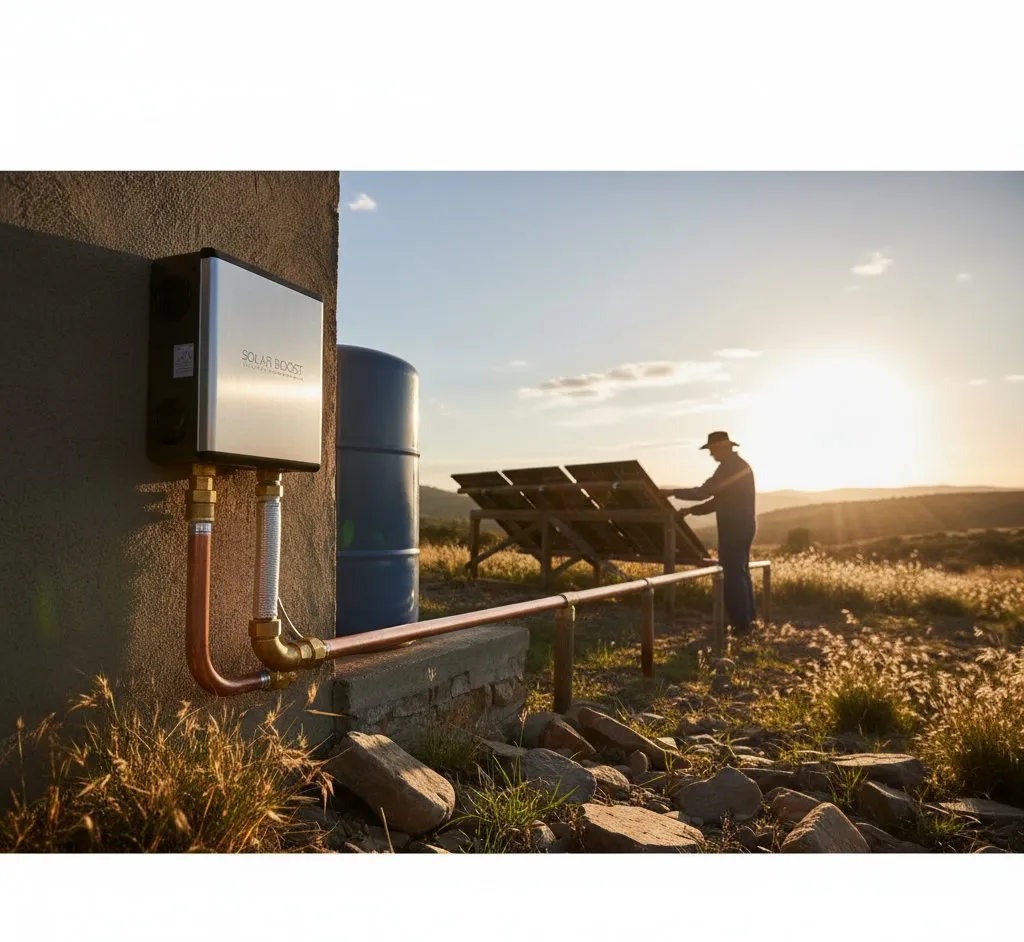
A solar diverter is one of the simplest and most cost-effective ways to use surplus solar electricity. Instead of exporting excess generation to the grid for a modest payment, a diverter sends it to your immersion heater, giving you free hot water. Here's how they work and whether one makes sense for your setup.
How Solar Diverters Work
A solar diverter monitors electricity flow at your meter point using a CT clamp (current transformer clamp — a sensor that clips around a live cable to measure current flow without cutting the cable). When it detects that your solar panels are generating more than your home is consuming (i.e., you're about to export), it diverts the surplus to a connected load — typically your immersion heater.
The diversion uses PWM (Pulse Width Modulation) — the diverter continuously adjusts the power sent to the immersion element to exactly match the available surplus. Rather than simply switching the heater on or off, the diverter might run the element at 400W one second and 1,800W the next, always tracking the solar generation. This smooth, variable control means virtually no electricity is wasted to export.
The Key Principle
- Without a diverter: surplus solar goes to the grid at your SEG rate (basic fixed: 3–5p/kWh, competitive: up to 15p/kWh)
- With a diverter: surplus heats your water, saving ~24.67p/kWh (what you'd pay to heat water from the grid at the Q2 2026 price cap)
The saving is the difference between export value and import cost — typically 10–20p per kWh diverted, depending on your export tariff.
Do You Need a Hot Water Cylinder?
Yes. Solar diverters only work if you have a hot water cylinder with an immersion heater. This includes:
- Traditional vented cylinders (gravity-fed systems)
- Unvented (pressurised) cylinders
- Thermal store cylinders
- Heat pump cylinders with immersion backup
Solar diverters do NOT work with:
- Combi boilers (no cylinder)
- Instantaneous water heaters
- Systems without an immersion heater element
If you have a combi boiler and no cylinder, a solar diverter isn't an option. You'd need to install a hot water cylinder first (£500–1,500), which may or may not be cost-effective depending on your circumstances.
Check Your Immersion Heater
Before buying a diverter, confirm your cylinder has a working immersion heater. Many households with gas heating haven't used their immersion in years — the element may have failed or seized. A plumber can check and replace it if needed (typically £80–150).
Top Solar Diverters
myenergi Eddi
The most popular solar diverter in the UK. Made by myenergi (the same company behind the Zappi EV charger).
- Diverts up to 3.68kW to one or two heater loads
- WiFi connected with app monitoring
- Can prioritise between two loads (e.g., hot water first, then underfloor heating)
- Works with the myenergi ecosystem (Zappi, Libbi, Hub)
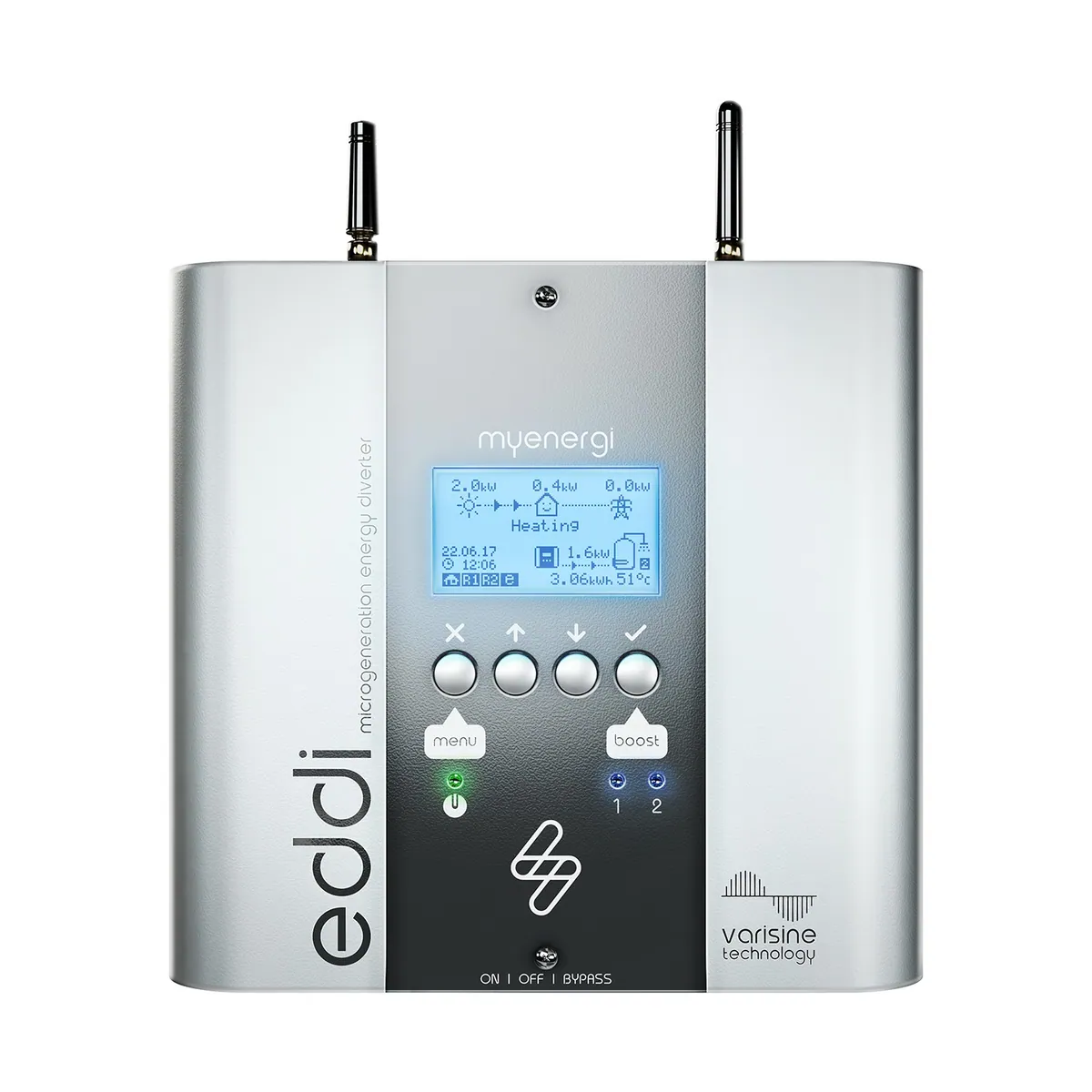
myenergi Eddi Solar Diverter
£4903000
power_divert,timed_boost
2
configurable
Affiliate link — we may earn a small commission at no extra cost to you
Solar iBoost+
A well-established, simpler alternative.
- Diverts surplus to immersion heater
- Wireless sender clips to your meter tails
- LCD display shows energy diverted
- Timer function for boost heating
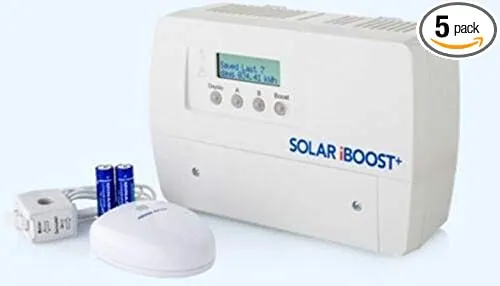
Solar iBoost+ Immersion Heater Controller
£1503000
auto_divert,manual_boost
1
true
Affiliate link — we may earn a small commission at no extra cost to you
Costs and Payback
Payback Calculation
Assume you divert 1,500kWh per year to hot water (realistic for a 4kW system):
- Value of diverted electricity: 1,500 x 24p = £360 per year (what you'd pay to heat water from the grid)
- Minus lost export income: 1,500 x 12p = £180 per year (what you'd have earned exporting)
- Net annual benefit: £180
At a total cost of £400–600, payback is 2.2–3.3 years. That's a strong return.
Solar Diverter vs Battery Storage
This is a common question. Both use surplus solar, but differently:
A solar diverter is far cheaper and has much faster payback, but it only helps with hot water. A battery is more versatile but costs 5–10x more. Many households install a diverter first and add a battery later when prices fall further.
Can You Have Both?
Yes. A diverter and battery can work together. The typical priority order:
- Power your home's immediate needs
- Charge the battery
- Divert surplus to hot water
- Export any remaining surplus to the grid
Most hybrid inverters and smart diverters can be configured to work in this sequence.
Don't Overheat Your Cylinder
A solar diverter will keep heating water as long as surplus is available. Most diverters have a temperature limit setting (typically 60°C) that stops diversion when the cylinder reaches a safe maximum. Make sure this is set correctly during installation. Water above 60°C is a scalding risk, and overheating can damage the cylinder or pressure relief valve.

Installation
Solar diverter installation is relatively simple:
- CT clamp fitted to your meter tails (measures grid import/export)
- Diverter unit mounted near your consumer unit or immersion heater
- Wiring from the diverter to the immersion heater circuit
- Configuration — setting temperature limits, priority loads, and WiFi connection
A qualified electrician can install a solar diverter in 1–2 hours. Some solar installers include diverter installation as part of a solar package.
Beyond Hot Water
While immersion heating is the primary use, some diverters can also power:
- Underfloor heating — Electric underfloor heating elements can be connected as a second priority load
- Towel rails — Electric towel radiators
- Storage heaters — Charging storage heaters with solar surplus during the day
The myenergi Eddi supports two loads with configurable priority, making it versatile for multi-load setups.
RdSAP 10 and EPC recognition
Since 15 June 2025, solar diverters are formally recognised in EPC assessments under RdSAP 10. A diverter is credited with reducing grid import, which improves your property's modelled energy performance score. This means fitting a diverter now has a measurable EPC benefit — something that was not the case under the previous RdSAP 9 framework.
For broader solar load control — monitoring individual circuits, automating immersion switches, or building a full smart-home energy setup — Shelly Wi-Fi devices integrate with most solar systems and work with Home Assistant out of the box:
Who Benefits Most?
Solar diverters make the most financial sense for:
- Households with a hot water cylinder and immersion heater
- Systems without battery storage (the diverter captures value that would otherwise go to low-rate export)
- Households that use significant hot water (families with regular baths/showers)
- Systems with export limitations where surplus would otherwise be curtailed entirely
They make less sense for:
- Households with combi boilers (no cylinder)
- Systems with large batteries that already capture most surplus
- Very small solar systems (less surplus available to divert)
Share this article
Stay informed
Get free solar updates direct to your inbox
Related reading
Solar Battery Storage: Complete UK Guide 2026
Adding battery storage to a UK solar installation — types, sizing, costs, and which products are worth considering in 2026.
G100 Export Limitation: What It Is and How It Affects You
G100 export limitation caps how much solar electricity you can send to the grid. What it means, when it applies, and strategies to minimise the impact.


Switch to Octopus Energy
Get 50 credit when you switch. We get 50 too — win-win.

Prefer 100% renewable, community-owned?
Your Co-op Energy runs on 100% renewable electricity — profits reinvested in community energy projects.
What does this mean for YOUR home?
Design your perfect solar setup in under 3 minutes. Free, no sign-up required.
Build Your Solar System