This page contains affiliate links. If you purchase through them we may earn a small commission at no extra cost to you. Learn more
Snow and Wind Loading on Solar Panels
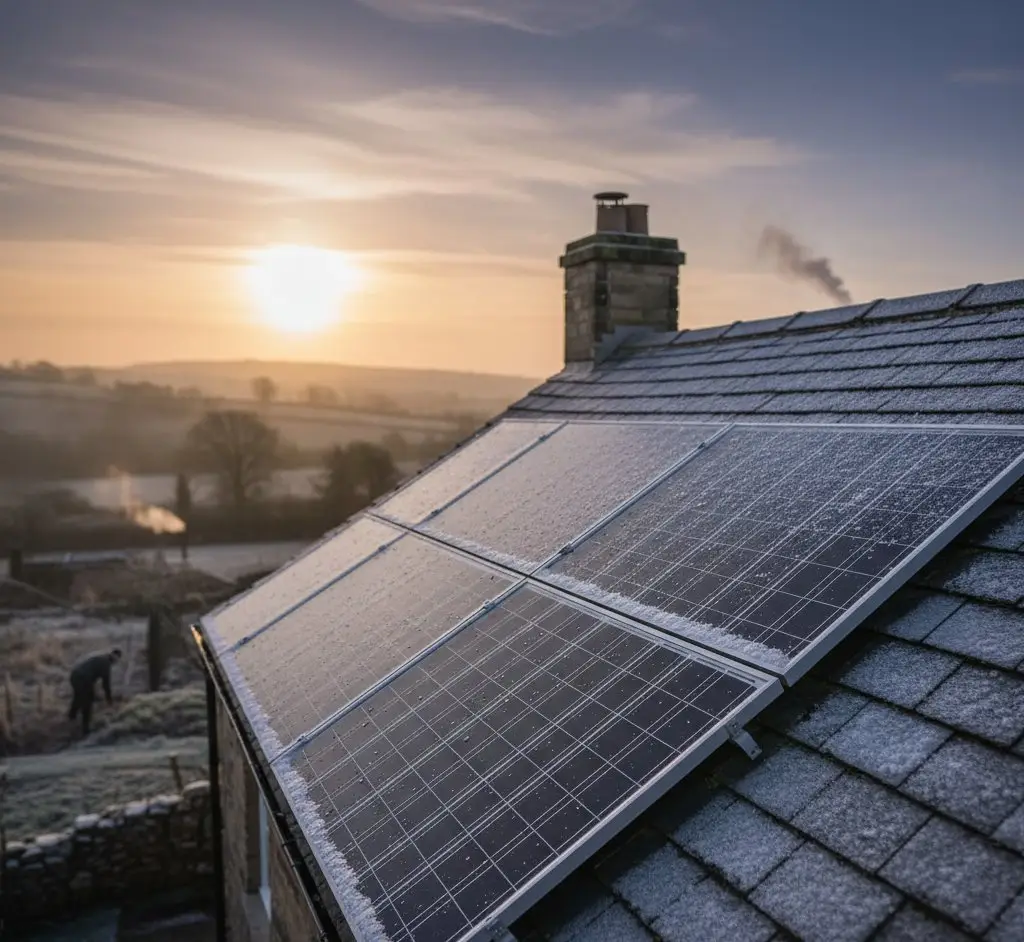
Wind loading
How panels withstand wind
Solar panels are essentially flat plates mounted at an angle — exactly the kind of shape that wind can push, pull, and twist. The mounting system must resist:
- Uplift — wind flowing over the panel creates low pressure above it (like an aircraft wing), trying to pull it off the roof
- Downward pressure — wind hitting the panel face pushes it into the roof
- Lateral forces — wind from the side creates shear loads on the mounting brackets
UK mounting systems are engineered to handle these forces with significant safety margins. The standard design load for solar installations considers wind speeds from the site-specific wind zone map, typically:
- Basic wind speed: 21–30 m/s depending on location (higher in Scotland, coastal areas, and elevated sites)
- Design wind pressure: typically 1,000–2,400 Pa after accounting for height, terrain, and exposure factors
Most quality solar panels are rated to 2,400 Pa front load and 1,200 Pa rear load. The mounting system (rails, hooks, fixings) must match or exceed this.
How panels fail in storms
Panel damage from wind is extremely rare in the UK, but when it happens, the cause is almost always:
- Poor installation — insufficient roof hooks, missed rafters, or weak fixings
- Damaged or decayed roof structure — the panel mounting is only as strong as the rafters and tiles it's attached to
- Flat-roof ballast failure — insufficient weight holding the mounting frames down on flat roofs
- Extreme events — once-in-a-century storms exceeding design parameters
Well-installed solar panels on a sound roof structure will comfortably survive any storm the UK typically experiences.
Check your home insurance
Contact your insurer to confirm your solar panels are covered for storm damage. Most standard buildings insurance policies cover solar panels, but some require you to notify them of the installation. The additional premium, if any, is typically minimal.
Snow loading
Is snow a real concern in the UK?
For most of the UK, no. Snow loading on solar panels is a minor consideration because:
- UK snowfall is typically light — heavy snow is infrequent in England and Wales
- Panels are tilted — snow slides off pitched panels naturally
- Dark surfaces absorb heat — even on cold days, panels absorb some sunlight through snow, warming slightly and promoting melting
- Snow doesn't last long — UK temperatures rarely stay below freezing for extended periods in most regions
Where snow matters
- Scottish Highlands — significant snowfall and extended cold periods
- Elevated sites (above 200m) — more snow, colder temperatures, slower melting
- North-facing roofs — snow lingers longer without direct sun
- Flat panels — snow sits on horizontal panels without sliding off
For these situations, the structural engineering must account for snow loads as per BS EN 1991-1-3 (Eurocode 1: Snow loads). Your installer should check the snow zone map for your location.
Snow load specifications
Solar panels are typically rated for a snow load of 2,400–5,400 Pa (equivalent to roughly 0.2–0.5m of packed snow). UK ground snow loads range from 0.3 kN/m² in lowland southern England to 1.0+ kN/m² in Scottish Highlands.
The mounting system and roof structure must support the combined weight of the panels plus snow. A structural assessment is essential for properties in high-snow areas.
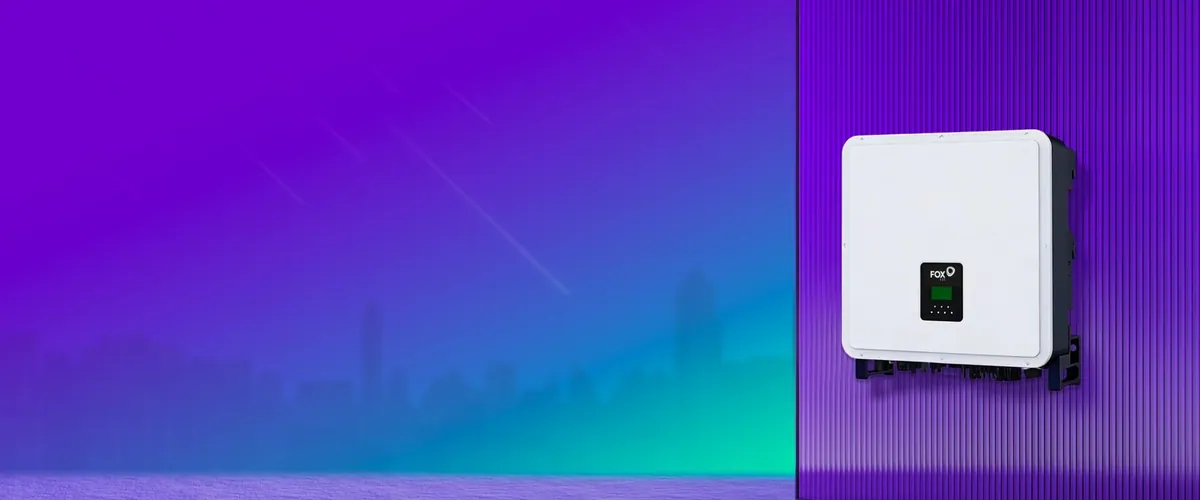
Fox ESS H3 PRO 5kW Hybrid Inverter
£1,0505
10
2
48V
Affiliate link — we may earn a small commission at no extra cost to you
Should you clear snow off panels?
No. Do not climb on your roof to clear snow from solar panels.
The safety risk of climbing on a snow-covered, slippery roof massively outweighs any benefit from a few hours or days of restored generation. Falls from height are a leading cause of fatal injuries in the UK.
Instead:
- Wait for it to melt — it usually does within a day or two in most of the UK
- Accept the production loss — a few days of zero generation in winter has minimal impact on annual yield (winter generation is already low)
- If snow persists for weeks (exceptional circumstances), use a soft-bristled telescopic brush from ground level to gently push snow off the lower edge of accessible panels
Never use hot water or sharp tools on snowy panels
Pouring hot water on cold glass risks thermal shock and cracking. Scraping snow with shovels or hard tools can scratch or crack the panel surface. If you must remove snow, use only a soft brush or foam snow rake from the ground, pushing gently from the bottom up.
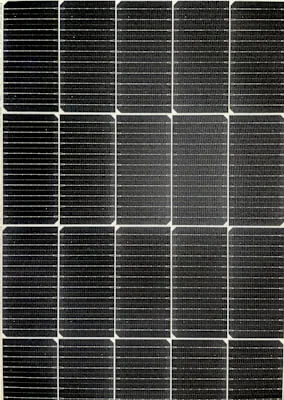
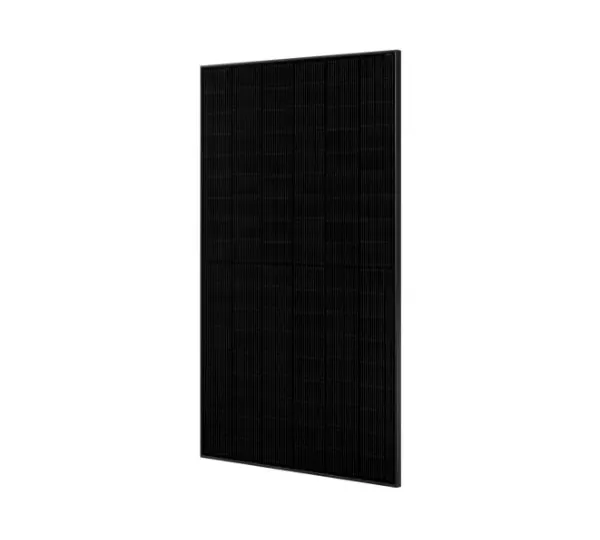
JA Solar JAM54D41 450W N-type TOPCon
£82450
22.8
1722 x 1134 x 30
21.5
Affiliate link — we may earn a small commission at no extra cost to you
Mounting system standards
MCS-certified installations must comply with MIS 3002 (the MCS installation standard for solar PV), which requires:
- Roof survey assessing structural capacity, tile condition, and rafter spacing
- Wind load calculation for the specific site using BS EN 1991-1-4
- Snow load calculation where applicable
- Fixing specification — correct hook type, rail size, and fixing intervals for the calculated loads
- Documentation proving the mounting system meets the loads for that specific site
This is one of many reasons MCS certification matters — it ensures your installation has been engineered for your specific roof, location, and conditions. A non-MCS installation may skip these calculations.
Extreme weather events
The UK has experienced increasingly severe storms (Storm Eunice in 2022, Storm Ciaran in 2023). Reports of solar panel damage from these events were extremely rare — a testament to the robustness of properly installed systems.
However, if you do experience storm damage:
- Do not approach damaged panels — they may still be generating voltage in daylight
- Switch off the system at the isolator if safely accessible
- Contact your installer for assessment
- Contact your insurer to report the damage
- Photograph the damage for insurance and warranty purposes
UK design standards
Solar panel mounting design in the UK is governed by two Eurocodes and one BRE digest, each covering a different part of the problem.
BS EN 1991-1-4:2005 (Eurocode 1 — Wind Actions) plus its UK National Annex is the primary governing standard for wind loading on structures. It defines the basic wind speed map for the UK, the method for calculating dynamic wind pressure at a given site height and terrain category, and the pressure coefficients for different roof and wall zones. Solar panel mounting calculations must reference this standard, with site-specific inputs for postcode wind zone, building height, and local terrain.
BS EN 1991-1-3:2025 (Eurocode 1 — Snow Loads) has been updated and now includes specific snow shape coefficients for roofs with rows of tilted solar panels. This is a meaningful change: previous editions used the underlying roof pitch to determine how snow distributes, which does not accurately capture the wind-driven redistribution of snow around panel geometry. The 2025 edition explicitly accounts for snow accumulating against the rear edge of panel rows — a pattern that can produce localised loads significantly above the ground snow value, particularly on shallow-pitch roofs and at lower panels in a multi-row array.
BRE Digest 489 provides specific design guidance for wind loads on roof-mounted PV and solar thermal systems. Where Eurocode 1 handles the general structure, BRE Digest 489 translates those principles into pressure coefficients specific to solar arrays on pitched and flat roofs — including the zone maps (Zone 1 centre, Zone 2 edges, Zone 3 corners) that MCS installers use to specify fixings. It also covers ballasted flat-roof systems and gives default friction coefficients for frame-to-roof contact.
Together, these three documents form the technical basis for all MCS wind and snow load assessments. MIS 3002 requires the design to reference them — it does not contain its own load tables.
When a structural engineer is needed
Not every roof requires a structural engineer for solar installation, but MIS 3002 specifies several situations where one is mandatory:
- Shallow pitch below 30 degrees — at lower pitches, snow does not self-clear as effectively and wind coefficients increase. The simplified MIS 3002 structural assessment methods (Method 1 and Method 2) are only valid above 30°.
- Hipped roof configurations — the complex geometry of a hipped roof means loads distribute differently across the rafters. The simplified methods do not cover this case.
- Valley roof configurations — valleys concentrate water, snow, and structural load. Solar arrays near valley junctions require site-specific assessment.
- Asymmetric duo-pitched roofs — where the two slopes differ significantly in pitch, the standard assessment tables do not apply.
- Any signs of structural distress — sagging rafters, cracking masonry, previous modifications (e.g., removed walls, extended purlins), or evidence of rafter notching all indicate the roof structure may not be at its original design capacity. An engineer must assess before additional loads are added.
CROSS (Collaborative Reporting for Safer Structures UK) has explicitly flagged concerns about inadequate structural assessment of domestic PV installations. In reports submitted by structural engineers, CROSS noted cases where solar panels were installed on roofs without any structural check, and where the combined weight of panels, mounting rails, and fixings was adding meaningful loads to rafters already operating near their design limit. The concern is not that solar panels are inherently dangerous — it is that the assumption of adequacy, without checking, is not always valid.
If your installer is not asking about your roof structure and rafter spacing before installation, that is a gap worth raising.
Wind uplift zones
Understanding how wind pressure varies across a roof helps explain several MCS requirements that might otherwise seem arbitrary.
BRE Digest 489 divides a roof slope into three pressure zones:
The pressure differential is caused by wind accelerating around protruding edges, creating low pressure on the leeward side — the same physics that generates lift on an aircraft wing. At corners, this acceleration occurs from two directions simultaneously, compounding the effect.
What this means for fixings: panel fixings at roof edges and corners must be rated for the higher Zone 2 and Zone 3 pressures. A fixing specification that works for a centre-of-roof panel is not adequate for a corner panel — the uplift force may be two to three times higher. MCS-compliant designs specify different fixing intervals or hook ratings for edge and corner positions.
This is directly why the MIS 3002 400mm edge clearance rule exists. Moving panels 400mm inward from the roof edge shifts them out of the worst part of the Zone 2 pressure region. Placing panels at the very edge and expecting standard fixings to hold is a design error — the forces are simply higher than standard fixings are rated for in those positions.
Share this article
Stay informed
Get free solar updates direct to your inbox
Related reading

Is My Roof Suitable for Solar Panels?
Find out if your roof can take solar panels — covering direction, angle, shading, structural condition, and options for tricky roofs.
Solar Panel Maintenance: What's Actually Needed?
The honest guide to solar panel maintenance in the UK — spoiler: it's less than you think. What you actually need to do, and what you can safely skip.


Switch to Octopus Energy
Get 50 credit when you switch. We get 50 too — win-win.

Prefer 100% renewable, community-owned?
Your Co-op Energy runs on 100% renewable electricity — profits reinvested in community energy projects.
What does this mean for YOUR home?
Design your perfect solar setup in under 3 minutes. Free, no sign-up required.
Build Your Solar System