This page contains affiliate links. If you purchase through them we may earn a small commission at no extra cost to you. Learn more
Moving House with Solar Panels: What Happens?

If you're selling a home with solar panels or buying one, there are practical and legal considerations. The good news: it's straightforward in most cases. The bad news: leased or rented panels can complicate things.
Panels You Own Outright
If you purchased your solar system outright (or finished paying off finance), the panels are a fixture of the property — like a kitchen or bathroom. They transfer automatically with the sale.
What the Seller Should Do
Before marketing:
- Gather all solar documentation (MCS certificate, warranties, installation details)
- Ensure the system is working properly and well-maintained
- Get an updated EPC showing the solar installation
- Check your generation meter reading
During the sale:
- Include solar panels in the property listing (it's a selling point)
- Provide the buyer with all documentation
- Notify your SEG supplier that you're moving (they'll close your account)
- Transfer monitoring account credentials (Solis Cloud, SunSynk Connect, Fox Cloud, GivEnergy portal, etc. — GivEnergy owners: the GivTCP local path keeps data accessible if the cloud portal is disrupted by the April 2026 administration)
At completion:
- Hand over: MCS certificate, inverter manual, warranty documents, generation meter reading
- Provide installer contact details for future maintenance
- Cancel your SEG registration
What the Buyer Should Do
- Request all solar documentation from the seller
- Register for SEG with your chosen supplier (see our SEG guide)
- Register the system with the manufacturer for warranty coverage
- Set up monitoring (inverter app/portal)
- Inform your home insurer about the solar panels
- Take a generation meter reading on completion day
Check the Warranties Transfer
Most solar panel and inverter warranties are tied to the installation address and transfer automatically. However, some require the new owner to register. Check with the manufacturer see givenergy.com or the administrator's guidance. Don't assume warranties carry over without checking.
Feed-in Tariff Systems
If the property has a system registered under the Feed-in Tariff (FiT), this is a significant financial asset. FiT payments are inflation-linked and continue for 20–25 years from the original installation.
How FiT Transfers
- The seller notifies their FiT licensee (energy supplier) of the property sale
- The FiT licensee transfers the FiT registration to the new owner
- The buyer needs to provide their details and meter readings
- FiT payments continue to the new owner at the same rate
FiT Value
FiT rates depend on the installation date. Systems installed during the generous early years (2010–2012) can have generation tariffs of 40–45p/kWh — worth £1,500–£2,000/year. This is a valuable asset that should be reflected in the property price.
Don't Let FiT Payments Lapse
If the FiT registration isn't properly transferred, payments stop. The new owner must actively complete the transfer with the FiT licensee. Don't assume it happens automatically — chase it if necessary. Lost months of FiT payments are lost forever.
Leased or Rented Panels
If the solar panels are under a lease, Power Purchase Agreement (PPA), or rent-a-roof scheme, the situation is more complex:
The Problem
The buyer must agree to take over the lease agreement. This means:
- Accepting a 15–25 year financial commitment they didn't choose
- The lease company retains ownership of the panels and equipment
- Some mortgage lenders are reluctant to lend on properties with solar leases — Unmortgageable covers the mortgage complications in detail
- Conveyancing solicitors may raise concerns
Impact on Sale
Leased panels can:
- Reduce the pool of potential buyers (some won't accept the lease)
- Extend the time to sell (additional legal complexity)
- Reduce the sale price (buyers discount for the lease commitment)
- Cause mortgage issues (some lenders refuse or restrict lending)
Options for Sellers with Leased Panels
- Transfer the lease: Find a buyer willing to take it on (most common)
- Buy out the lease: Pay the lease company to terminate early and own the panels outright. Early termination fees can be significant.
- Remove the panels: Have the lease company remove the system. This may involve costs and leaves you without the generation benefit.

Conveyancing and Legal Considerations
Your solicitor should handle:
Property Information Form
Declare the solar installation in the property information form (TA6). Include:
- Whether panels are owned, leased, or rented
- System size and installation date
- Installer and MCS details
- Any ongoing finance agreements
Building Regulations
Confirm the installation has proper building regulations sign-off (Part P electrical certification). If this is missing, indemnity insurance may be needed.
Planning Permission
Solar panels on most houses don't need planning permission (permitted development). But confirm this — especially in conservation areas or on listed buildings.
Roof Warranties
If panels were installed on a new or recently replaced roof, check whether the roof warranty is affected. Most aren't, but some roof tile manufacturers have specific requirements.
Can You Take Solar Panels with You?
Technically possible but almost never practical:
- Removal costs £1,000–£2,000
- Roof repair costs after removal: £500–£1,500
- Reinstallation at the new property: £2,000–£3,000
- You may need different panels/layout for the new roof
- Total cost: £3,500–£6,500 (close to a new installation)
It's almost always better to leave the panels (which add value to the property) and install a new system at your new home if desired.
If you're buying a home without solar and want to install your own system:
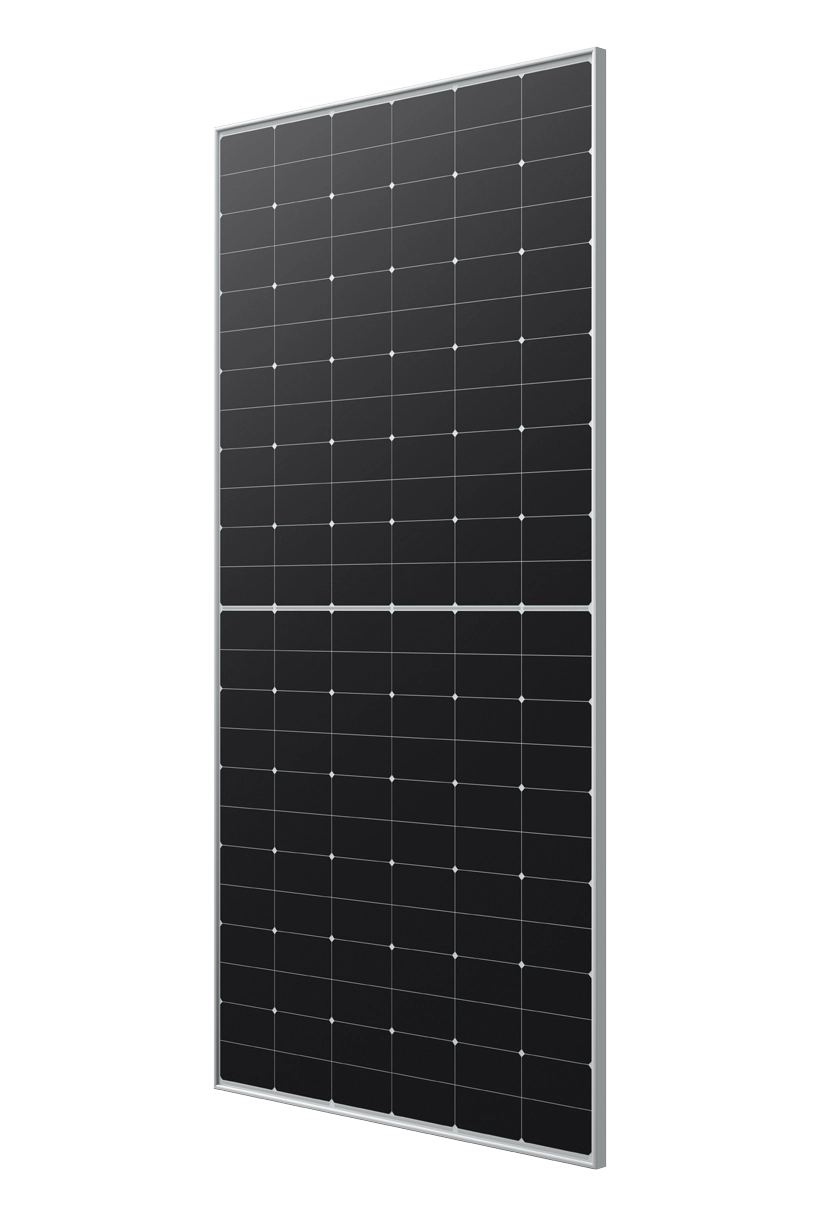
LONGi Hi-MO X6 450W
£85450
23
1722 x 1134 x 30
21.3
Affiliate link — we may earn a small commission at no extra cost to you
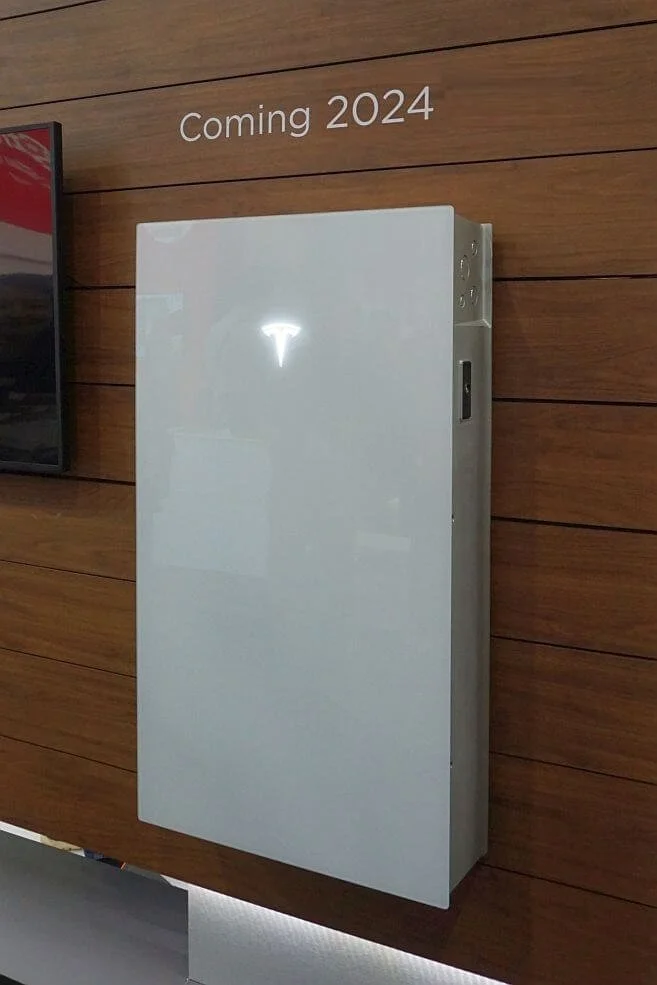
Tesla Powerwall 3
£8,50013.5
13.5
LFP
4000
Affiliate link — we may earn a small commission at no extra cost to you
Buying a House with Solar
If you're buying a property with existing solar panels:
What to Check
- Ownership: Are the panels owned outright, leased, or rented? (Critical question)
- Age and condition: When were they installed? What condition are they in?
- Warranties: Are panel and inverter warranties still valid?
- MCS certificate: Does it exist? (Required for SEG registration)
- Generation data: What has the system actually produced?
- Inverter age: String inverters last 10–15 years — if it's old, budget for replacement
- FiT registration: If applicable, is the transfer in progress?
Red Flags
- No MCS certificate (may be a non-certified installation)
- Leased panels with a reluctant or unresponsive lease company
- No generation data or monitoring records
- Visible panel damage or non-functioning inverter
- Missing building regulations sign-off
Green Flags
- Full documentation including MCS certificate
- Owned outright with no lease
- Active FiT registration with good rates
- Recent installation with long remaining warranty
- Well-maintained with generation records
Solar panels on a property you're buying are generally a positive — they reduce bills, improve the EPC, and provide export income. Just make sure the paperwork is in order and the system is genuinely owned, not leased.
Solar Panels and Divorce or Separation
Property disputes during divorce or separation can get complicated when solar panels are involved. Here's what you need to know.
Panels are fixtures — they belong to the property
In English and Welsh law, solar panels affixed to a roof are classified as fixtures (as opposed to chattels). Once bolted to the roof, they become part of the property itself. This means:
- The panels belong to whoever legally owns the property, not whoever paid for them
- They cannot be unilaterally removed by one party without damaging the property
- They form part of the asset that must be considered in any financial settlement
If you're renting panels (lease or rent-a-roof scheme), the lease company remains the owner — consult your solicitor about how the lease obligation is handled during a transfer of ownership.
SEG contract and FIT payments
The Smart Export Guarantee (SEG) registration is tied to the property owner, not the occupant. If ownership changes as part of a settlement:
- The existing SEG contract must be closed by the departing owner
- The incoming owner must set up a new SEG registration with their chosen supplier
- This requires the MCS certificate — ensure this document is retained and handed over
If the property has a legacy Feed-in Tariff (FiT) registration, the same applies. FiT payments cannot simply be redirected — the FiT licensee (energy supplier) must be notified and the registration formally transferred to the new owner. Lost months of FiT income cannot be reclaimed, so deal with this promptly.
FIT Transfers Don't Happen Automatically
If ownership changes and neither party notifies the FiT licensee, payments may continue going to the wrong person — or stop altogether. This is a financial loss neither party wants. Notify the FiT licensee as soon as the ownership transfer date is known.
Should panels be removed?
Almost always: no. Removing panels is destructive to the property and financially counterproductive:
- Removal costs £1,000–£2,000
- Roof repair after removal: £500–£1,500
- Reinstalling elsewhere: £2,000–£3,000+
- Removal voids the MCS certification — the new site would need fresh MCS accreditation
- Panels are a selling point that adds value to the property and improves the EPC
The right approach in almost every case is to treat the panels as part of the property asset and factor their value into the financial settlement, not to physically remove them.
Factoring panel value into a financial settlement
Solar panels are a property improvement, similar to a new kitchen or extension. When agreeing a financial settlement:
- Establish the system's current market value. A rough guide: depreciated replacement cost minus age, or ask a solar installer for a valuation. A well-maintained 4kW system with 15 years of remaining FiT income might be worth £5,000–£10,000 more to a property than the physical hardware cost suggests.
- If the property has a FiT registration, the remaining FiT income stream has a calculable present value — your solicitor can factor this in.
- Any finance still outstanding on the panels (e.g., a green loan) is a liability to offset against the asset value.
- Document everything: system size, installation date, remaining warranties, current generation data, SEG or FiT details.
Notify your insurer
Buildings insurance covers solar panels as part of the structure. If ownership of a property changes — including as part of a separation — the insurer must be notified. Continuing a policy in the wrong name invalidates the cover. The new owner should arrange their own buildings insurance from the date of transfer and ensure solar panels are explicitly included in the policy schedule.
Share this article
Stay informed
Get free solar updates direct to your inbox
Related reading
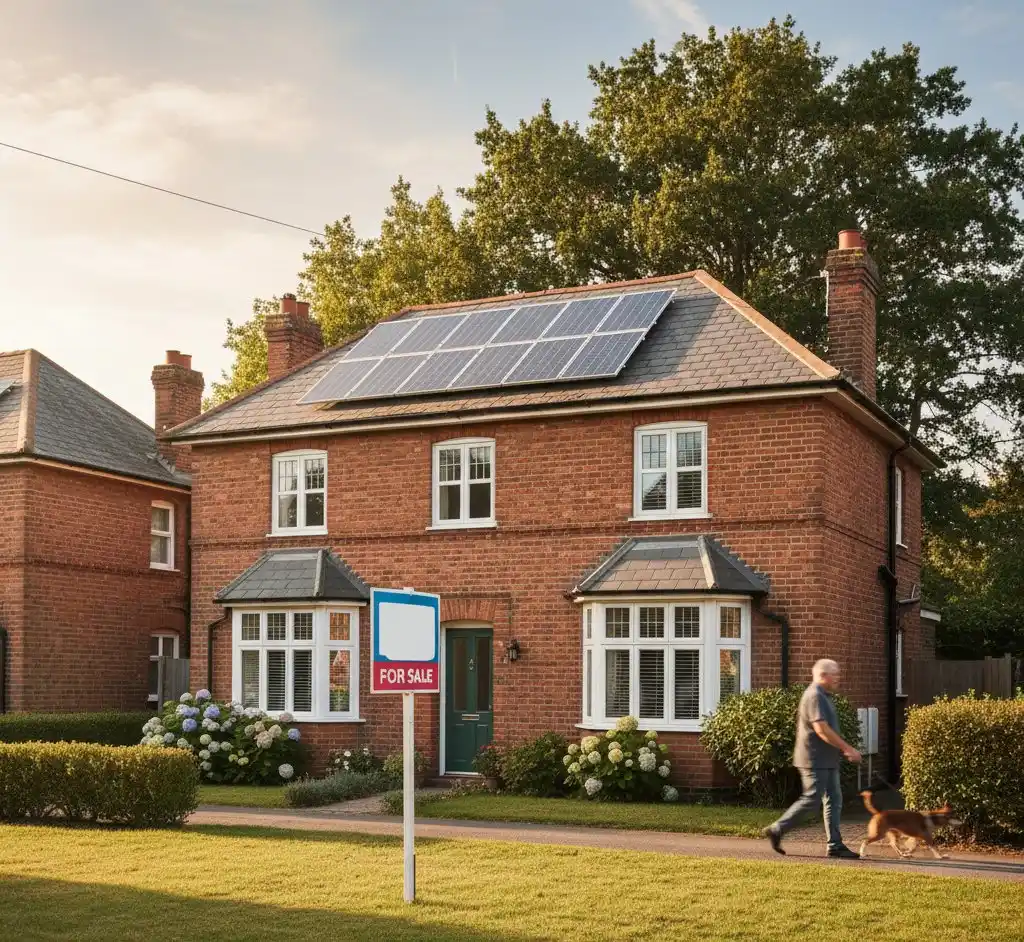
Do Solar Panels Increase Property Value?
Do solar panels add value to your home in the UK? What the research says, how much they add, and when they might actually reduce value.

Solar Panel Insurance: What You Need to Know
Is your solar system covered by home insurance? What to check, what to tell your insurer, and when you might need specialist solar panel insurance.


Switch to Octopus Energy
Get 50 credit when you switch. We get 50 too — win-win.

Prefer 100% renewable, community-owned?
Your Co-op Energy runs on 100% renewable electricity — profits reinvested in community energy projects.
What does this mean for YOUR home?
Design your perfect solar setup in under 3 minutes. Free, no sign-up required.
Build Your Solar System