This page contains affiliate links. If you purchase through them we may earn a small commission at no extra cost to you. Learn more
GivEnergy vs Fox ESS: Which Hybrid Inverter System Suits Your Home?

GivEnergy entered administration in April 2026 — see the resolution tracker for current status.
GivEnergy and Fox ESS were two of the most frequently discussed hybrid inverter brands in UK solar forums. Both sat in the mid-range of the market and both have matured considerably over the past few years. The technical comparison below still reads accurately — the administration context above shifts the weighting of the conclusion for new installs.
This comparison covers the hardware, battery ecosystems, monitoring software, smart tariff compatibility, backup capability, and community support. By the end, you should have a clear sense of which suits your particular situation.
A hybrid inverter combines a solar inverter, battery charger, and battery management system in a single unit. Unlike a standard string inverter, it manages grid import and export alongside battery charging and discharging — all without additional hardware. Both GivEnergy and Fox ESS take this approach.
Specifications compared
Prices are typical as of April 2026 and vary by installer and region. Always get a current quote.
The most striking difference on paper is the max PV input: Fox ESS allows up to 10kW of solar panels on a 5kW inverter, against GivEnergy's 6.5kW cap. If you have a large roof and want to oversize your array to maximise generation during low-irradiance months, this is a meaningful practical difference. GivEnergy's 6kW model pushes this to 9kW — still behind — though at a higher price.
Fox ESS also edges ahead on max charge/discharge rate: 5kW against GivEnergy's 3.6kW. In most homes this distinction is academic — your battery's own power limits will bind first — but for high-demand households it is worth noting.
Battery ecosystems
GivEnergy batteries
GivEnergy's flagship battery pairing is the All-in-One (AIO), an integrated unit combining a 9.5kWh LFP battery with a 3kW AC-coupled inverter in a single floor-standing cabinet.
- Capacity: 9.5kWh gross, 8.6kWh usable
- Chemistry: Lithium iron phosphate (LFP)
- Cycle life: 6,000 cycles
- Warranty: 10 years
- Round-trip efficiency: 92%
- Installed price: ~£5,500
GivEnergy also offers 2.6kWh stackable modules for more flexible capacity sizing. The AIO is the most popular choice for new installations because it includes everything in one compact unit.
The battery lock-in is real: GivEnergy hybrid inverters communicate via a proprietary BMS protocol, and third-party batteries are not officially supported. You are buying into the GivEnergy ecosystem.
Fox ESS ECS batteries
Fox ESS pairs its H3 Pro range with the ECS series — stackable modules available in 2.9kWh increments, badged as the ECS2900.
- Module capacity: 2.9kWh
- Chemistry: LFP
- Maximum stack: Typically up to 4 modules (11.6kWh)
- Cycle life: Around 6,000 cycles
- Warranty: 10 years
Like GivEnergy, the H3 Pro requires Fox ESS batteries — the lock-in applies equally. Fox ESS's battery range is more limited in the UK market and has a shorter track record than GivEnergy's, though quality has been acceptable in early deployments. If expandability matters — adding capacity over time — the ECS module approach is flexible.
Battery lock-in applies to both brands
Neither GivEnergy's Gen3 hybrid nor the Fox ESS H3 Pro officially supports third-party batteries. If open battery compatibility is important to you — to use Pylontech, BYD, or another brand — you may want to look at SunSynk or Solis instead, both of which have broader third-party compatibility.
App and monitoring quality
This is arguably the sharpest difference between the two brands.
GivEnergy portal — class-leading
GivEnergy's monitoring platform is consistently praised as one of the best in the residential market. It provides:
- 5-minute data intervals with full historical graphs
- Real-time power flow showing solar generation, battery state, grid import/export, and home consumption simultaneously
- Remote control — change operating modes, set charge/discharge schedules, adjust battery reserve, all from your phone
- Battery health tracking — state of health (SOH) data as well as state of charge (SOC)
- Smart tariff integration — built-in presets for Octopus Go, Agile, Flux, and Intelligent Octopus Go
- Open API — well-documented and freely available, enabling third-party integrations
The app is polished and the data is genuinely useful rather than decorative. If you like understanding exactly what your system is doing, GivEnergy's monitoring is a strong argument for choosing the brand.
Fox Cloud — functional but basic
Fox ESS's monitoring platform, Fox Cloud, has improved considerably since the early firmware issues of 2023–24. It now offers:
- Real-time power flow visualisation
- Historical generation and consumption data
- Remote schedule management
- Battery SOC monitoring
- Multi-site management (useful for installers with multiple properties)
It is functional and reliable. What it lacks is GivEnergy's data depth — the granularity is coarser, the historical views less detailed, and the smart tariff presets less developed. For most owners who want a simple overview without deep analysis, Fox Cloud is adequate. For those who want to optimise actively, it falls short.
Home Assistant and Predbat compatibility
Both inverters are controllable via local Modbus connections, meaning neither requires cloud access for automation.
GivEnergy has a larger Home Assistant community. The GivTCP project — an open-source tool connecting GivEnergy inverters to Home Assistant — is well-maintained, extensively documented, and has a large user base sharing configurations. If you are a Home Assistant user, GivEnergy's ecosystem is more mature and the setup path is better supported.
Fox ESS Home Assistant integration works, but the community is smaller and documentation thinner. If you are comfortable configuring Modbus devices and troubleshooting yourself, it is achievable. If you want a community of thousands who have solved the same problems, GivEnergy has the edge.
Smart tariff and VPP participation
GivEnergy's Octopus integrations are plug-and-play: if you switch to Octopus Flux (which pays 24.67p/kWh for exports during evening peak) or Intelligent Octopus Go (8p/kWh smart-charging rate, 6-hour auto-capped window from 2026), the inverter can receive automated dispatch signals without additional configuration. This is a real practical advantage for households wanting to participate in tariff-shifting without technical tinkering.
Fox ESS can achieve the same outcomes — automated charge during cheap windows, discharge during expensive periods — but it requires third-party tools or manual schedule management rather than a native integration.
Both brands support Axle Energy's VPP scheme, where your battery responds to grid signals in exchange for payments. If VPP income is part of your payback calculation, neither brand rules you out.
EPS backup capability
Both inverters include built-in Emergency Power Supply (EPS) functionality — the ability to island your home from the grid and run on battery and solar during a power cut.
Fox ESS H3 Pro is noted for a fast switchover time, typically under 20ms, which is fast enough to keep most sensitive electronics running without disruption. GivEnergy's EPS switchover is also within acceptable limits for most applications, though Fox ESS has the slight edge here in published specifications.
Neither inverter should be positioned as a whole-home backup solution without discussing which circuits are backed up with your installer. EPS typically covers only the circuits connected to the backup output, not the full consumer unit, unless additional work is carried out during installation.
EPS does not mean whole-home backup by default
Both GivEnergy and Fox ESS EPS modes typically protect a subset of circuits (the "backup" ring) rather than the whole property. Make sure your installer clearly explains which sockets and circuits will remain live during a grid outage — and that your most important loads are included in that ring.
Installer availability
Both brands are widely available through UK MCS-certified installers. GivEnergy has the larger installer base — it is the most widely installed hybrid inverter brand in the UK, meaning more installers have hands-on experience with it, including familiarity with its commissioning software, common fault codes, and firmware updates.
Fox ESS has a smaller but growing UK installer network. Finding an experienced Fox ESS installer is straightforward in most areas, but less so than finding an experienced GivEnergy installer. This gap is narrowing as Fox ESS market share grows.
Installer familiarity matters more than many buyers realise. An installer who has commissioned 200 GivEnergy systems understands the quirks; one who has fitted 10 Fox ESS systems may not. When getting quotes, ask each installer how many systems of each brand they have installed.
Warranty comparison
GivEnergy's 10-year inverter warranty extension is a meaningful differentiator. Inverters do fail, and having coverage for a decade removes a potential repair or replacement cost from your payback calculation. Fox ESS does not currently offer an extended warranty option.
Cost comparison
Fox ESS is the more affordable option across inverter and battery. The gap on a full installed system is roughly £500–1,000, depending on battery capacity and installer margins. Whether that saving justifies accepting a less mature monitoring platform and smaller community is the central trade-off.
Who historically chose GivEnergy?
Pre-administration, GivEnergy was the better fit if:
- You were on Octopus Energy or planning to switch to Flux, Agile, or Intelligent Go — the native integrations saved meaningful ongoing effort
- You wanted to use Predbat for automated Agile-tariff optimisation with minimal setup friction
- You used Home Assistant and wanted the larger community of users solving the same integration problems
- You valued detailed monitoring data and an app you would actually enjoy using
- You wanted the option to extend your warranty to 10 years
- Your installer had significantly more GivEnergy experience than Fox ESS experience
Post-administration, those same points still describe the product technically, but the continuity question sits on top of all of them. Existing owners: keep what you have. New buyers: weigh Fox ESS or the alternatives in inverter brand comparison.
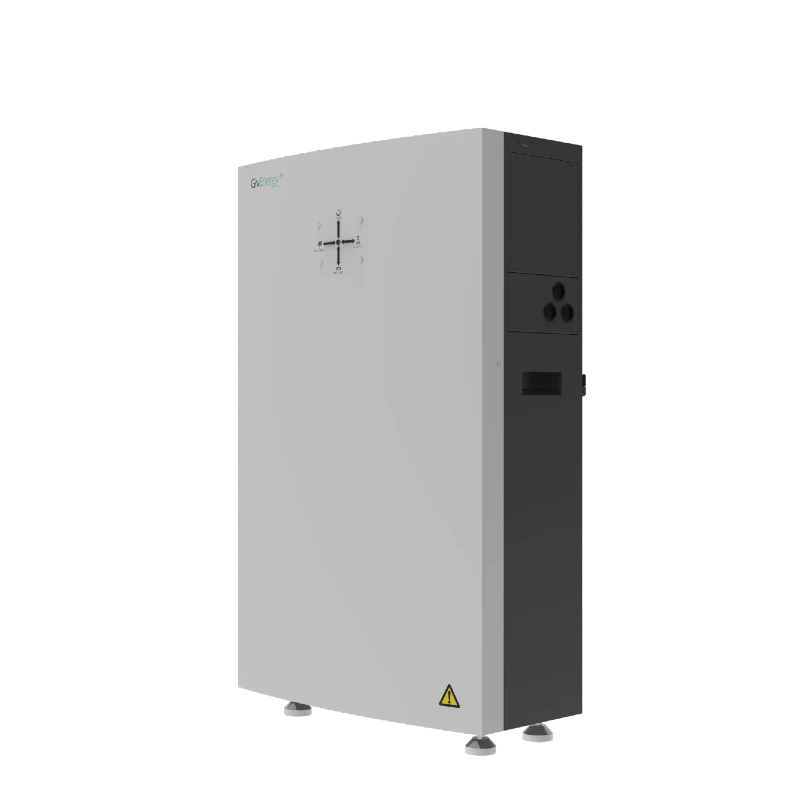
GivEnergy All-in-One 9.5kWh Battery
£5,5009.5
8.6
LFP
6000
Affiliate link — we may earn a small commission at no extra cost to you
Who should choose Fox ESS?
Fox ESS is likely the better fit if:
- You have a large roof and want to oversize your solar array well beyond inverter capacity — the 10kW PV input headroom is a genuine technical advantage
- Budget is a key consideration and a £500–1,000 saving makes a meaningful difference
- Your installer has strong Fox ESS experience and a track record with the ECS battery range
- You are comfortable with manual schedule management or third-party automation tools rather than native tariff integrations
- You want higher charge/discharge rates (5kW vs 3.6kW) for faster battery cycling
The honest summary — April 2026
Pre-administration, GivEnergy was the safer, better-integrated choice for most UK households — particularly those wanting to engage actively with smart tariffs, Home Assistant automation, or Predbat optimisation. The monitoring portal was class-leading and the Octopus integrations removed friction.
Post-administration, that position inverts for new installs. Fox ESS becomes the straightforward pick of the two, with a meaningful price advantage, a genuine technical edge on PV oversizing, and no continuity question. For existing GivEnergy owners the picture is different: the hardware still works, GivTCP / local Modbus still runs, and ripping out serviceable kit would be wasteful. Sit tight and monitor the administrator's resolution.
If you are weighing a new install today, defer to the installer who will support the system long term — brand familiarity and ongoing support relationship count for more than a marginal spec difference, and an installer's view on which brand they can still comfortably warranty-back today is useful.
Ask your installer what they install most
The right inverter for your home may ultimately be the one your installer knows best. An experienced installer is worth more than any spec advantage on paper. Ask each installer how many systems of each brand they have commissioned — and what their support process looks like if something goes wrong.
Specifications change regularly
Both manufacturers update their hardware and software regularly. Figures in this article reflect early April 2026 data. Check each manufacturer's current datasheet and your installer's current pricing before making a final decision.
Share this article
Stay informed
Get free solar updates direct to your inbox
Related reading
GivEnergy Inverter Review (April 2026 Update): Administration, Existing Owners, and Alternatives
GivEnergy inverter review updated for the April 2026 administration. What existing owners should do, whether new buyers should wait, and UK alternatives to consider.
Fox ESS Inverter Review: Is It Worth Considering?
Fox ESS hybrid inverter review for UK solar — updated for the April 2026 GivEnergy administration. The H3 Pro range, battery options, app quality, and why Fox ESS is now a lower-risk new-install pick.


Switch to Octopus Energy
Get 50 credit when you switch. We get 50 too — win-win.

Prefer 100% renewable, community-owned?
Your Co-op Energy runs on 100% renewable electricity — profits reinvested in community energy projects.
What does this mean for YOUR home?
Design your perfect solar setup in under 3 minutes. Free, no sign-up required.
Build Your Solar System